Cards: yes, almost everywhere
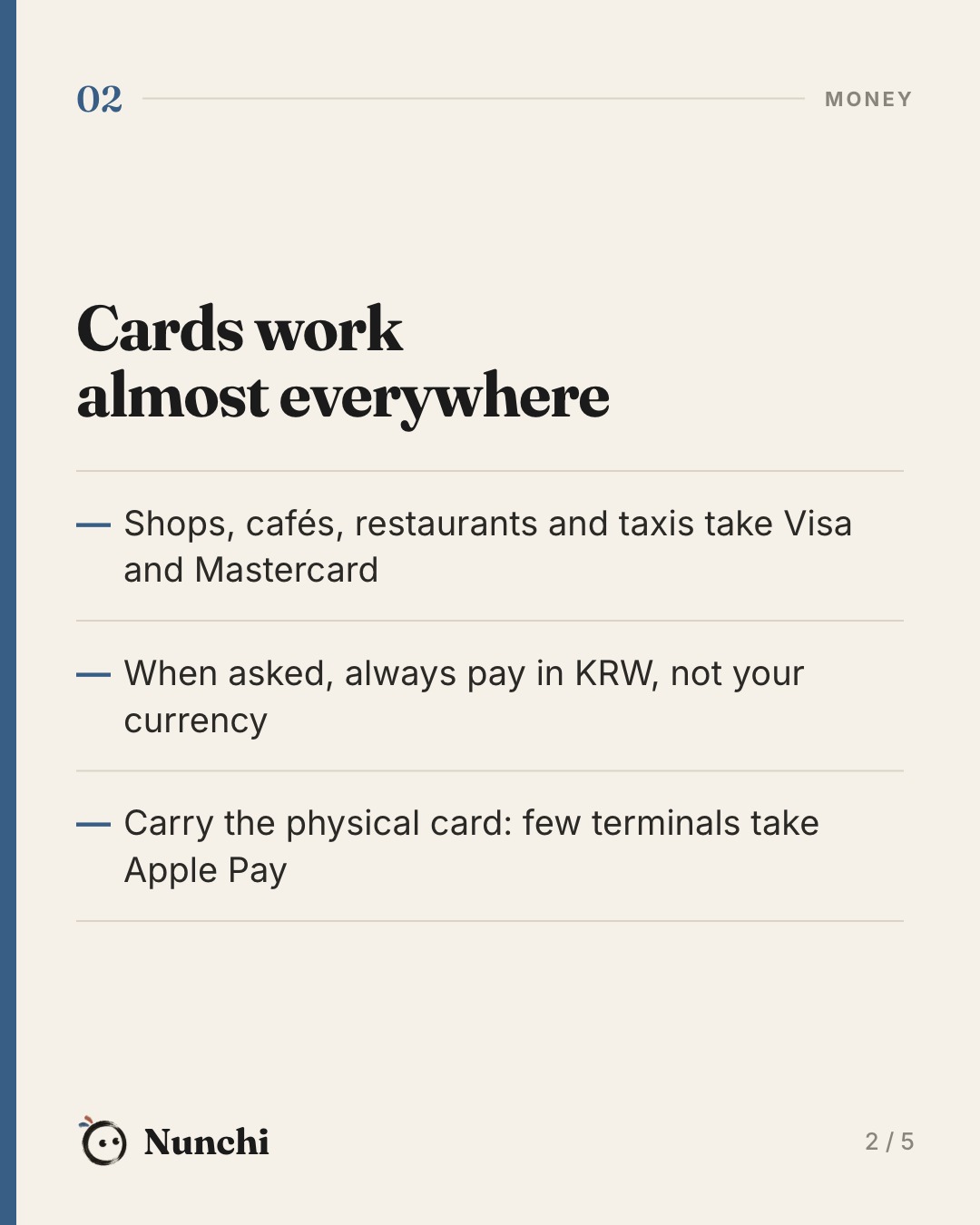
Korea is one of the most card-friendly countries in the world. Foreign Visa and Mastercard work in convenience stores, chains, cafés, most restaurants and taxis. Problems show up at the edges: a small shop's reader fails, or a merchant doesn't accept foreign cards because of the fees. Online sites that need Korean identity verification won't take them either.
- Pay in KRW. If the terminal offers to charge you in your home currency, say no. That "convenience" usually adds 3–8%.
- Apple Pay: only a small share of terminals are NFC, so it works at some chains, convenience stores and department stores but not reliably. Carry your physical card.
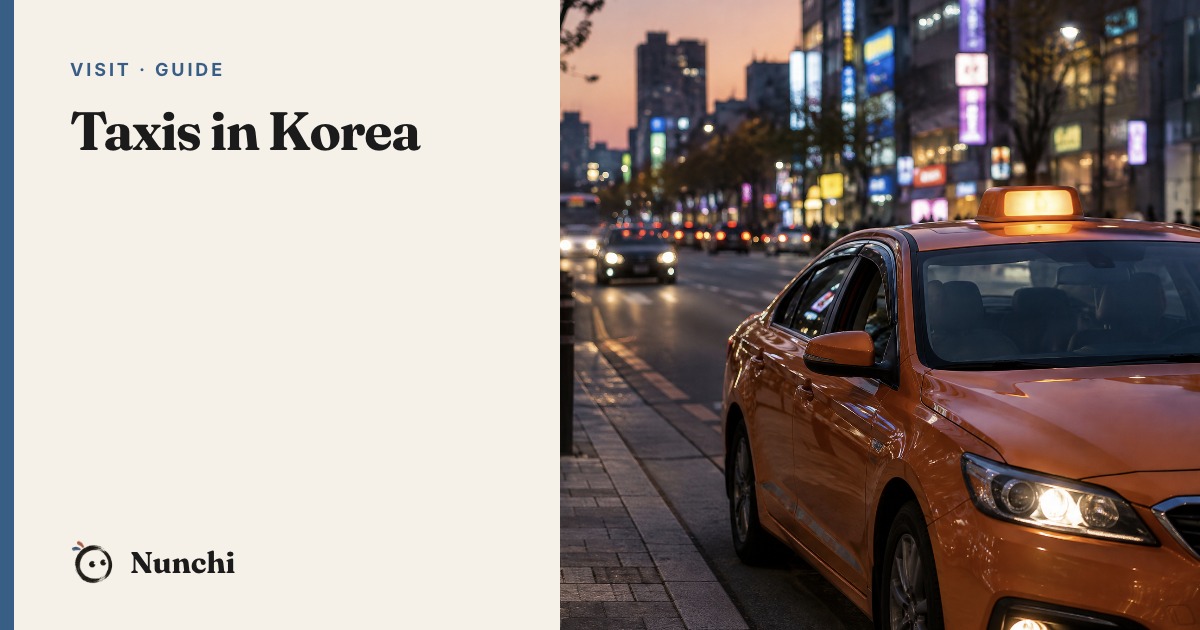
- Taxis all have card readers. Book through k.ride or Uber to pay by foreign card in the app.
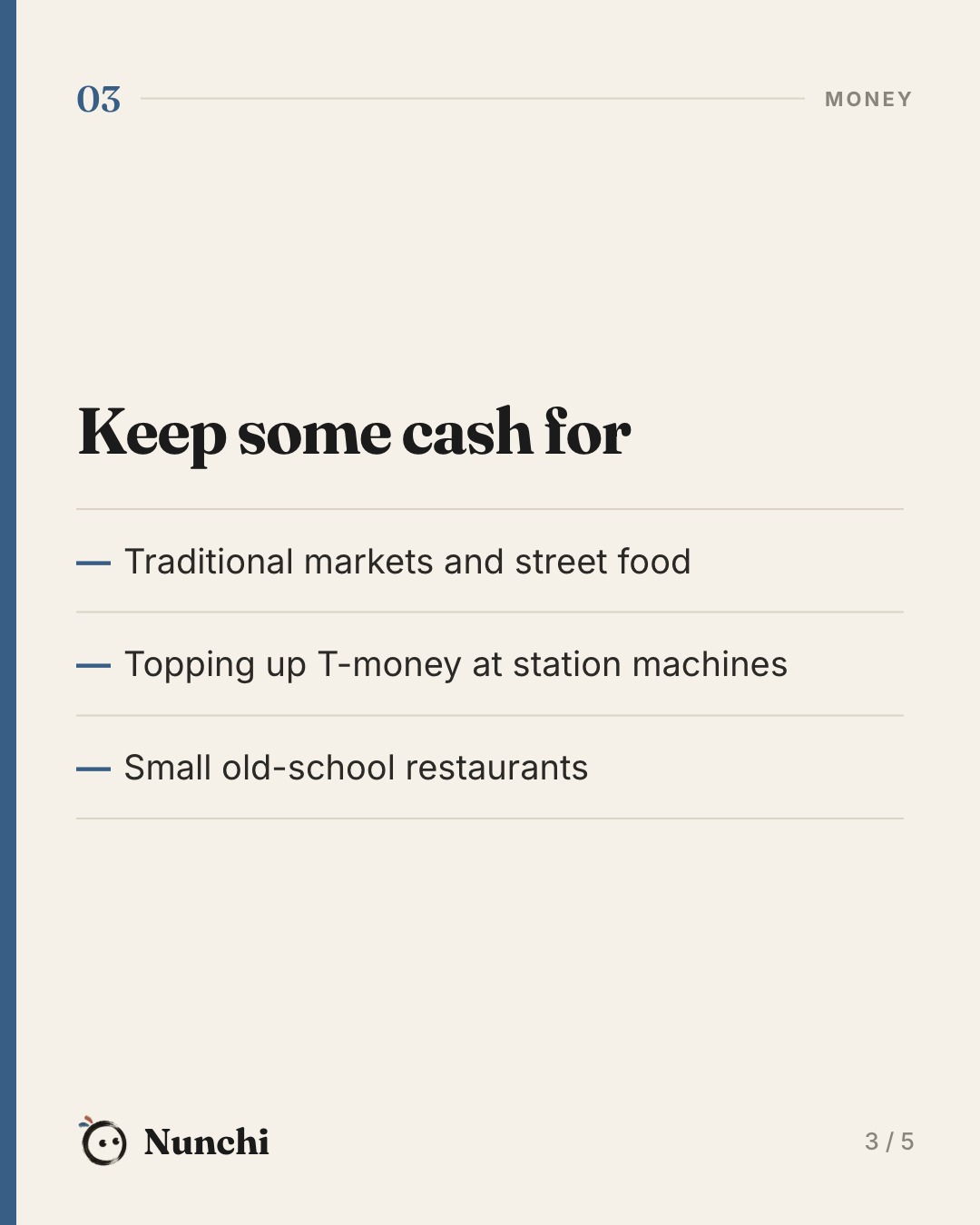
Where you still need cash
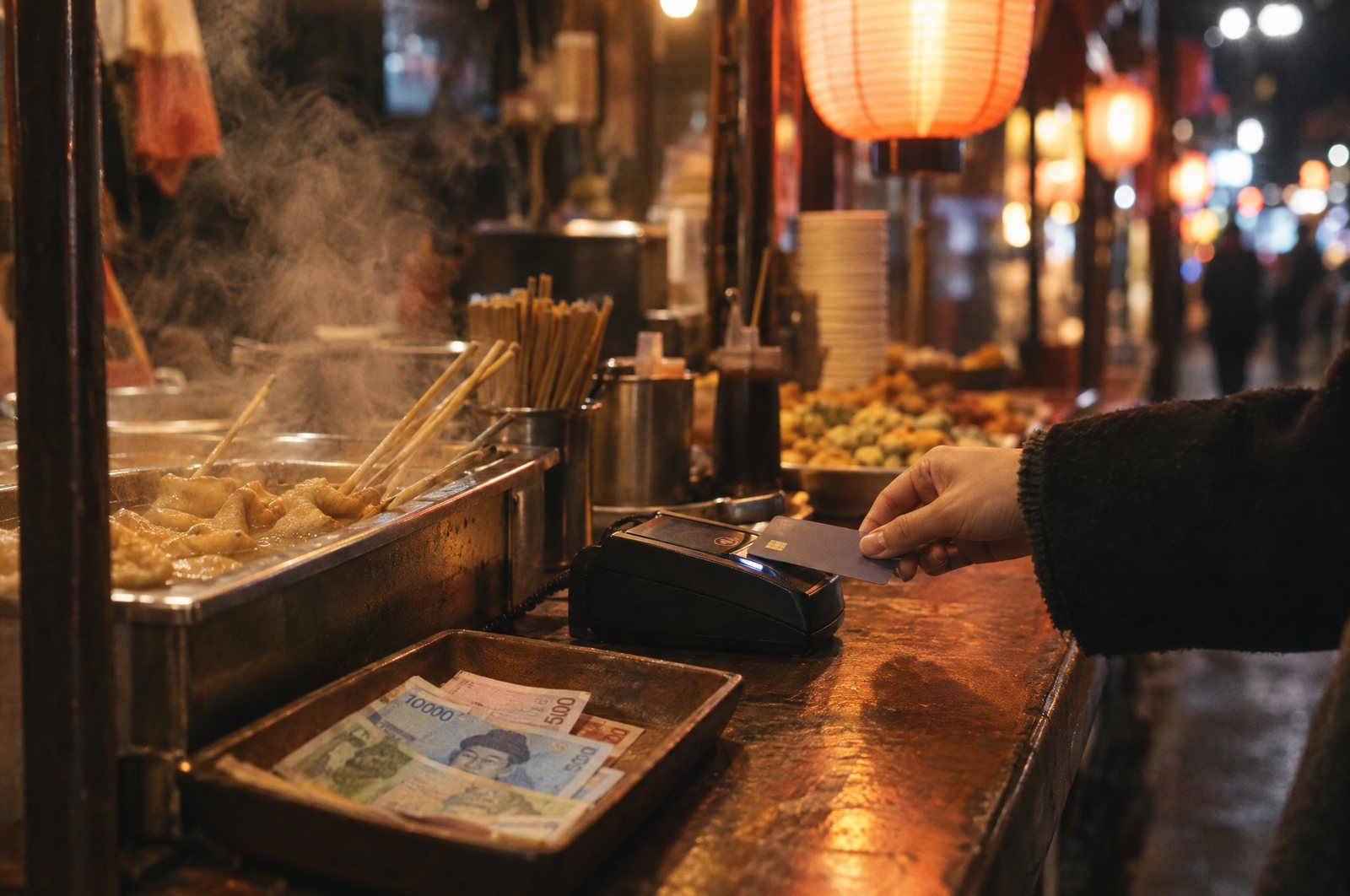
- Traditional markets and street food: Gwangjang, Namdaemun and most stalls prefer cash.
- T-money top-ups: station machines and convenience-store counters mostly take cash only. Since March 2026, the new kiosks at Seoul subway Lines 1–8 accept foreign cards, but for buying Climate Card passes, with a fee of about 3.7%.
- Buses: many Seoul buses no longer take cash at all, so tap a T-money card instead.
A few ₩10,000 and ₩5,000 notes for market days are plenty for most trips.
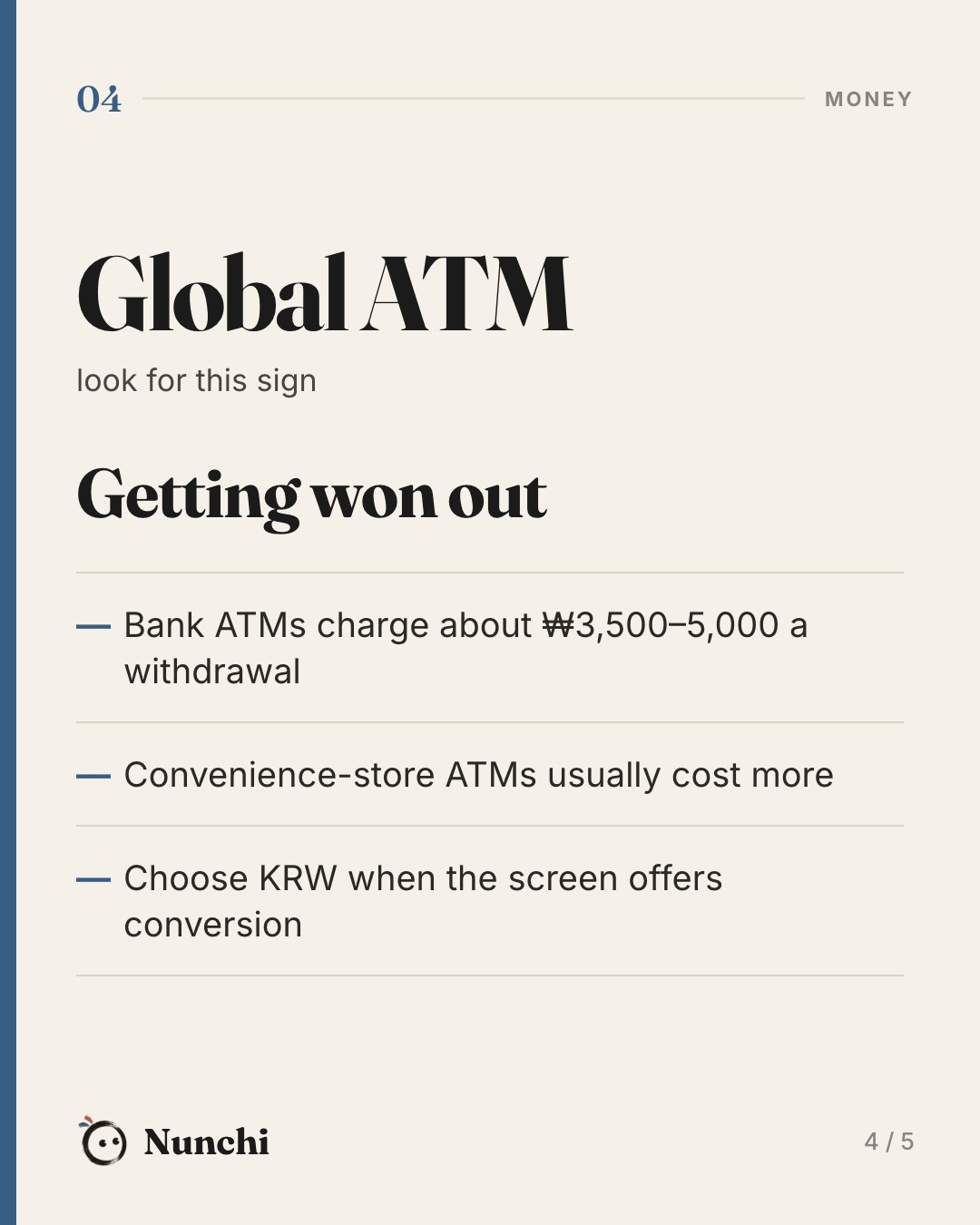
ATMs: look for "Global ATM"
Not every Korean ATM takes foreign cards. Look for a Global ATM sign. Most major banks (Woori, Hana, KB, Shinhan) have them, and so do airports. Expect a local fee of roughly ₩3,500–5,000 per withdrawal, plus whatever your home bank charges. Convenience-store ATMs are open late but usually cost more. If the screen asks whether to convert, choose KRW.
Exchanging money
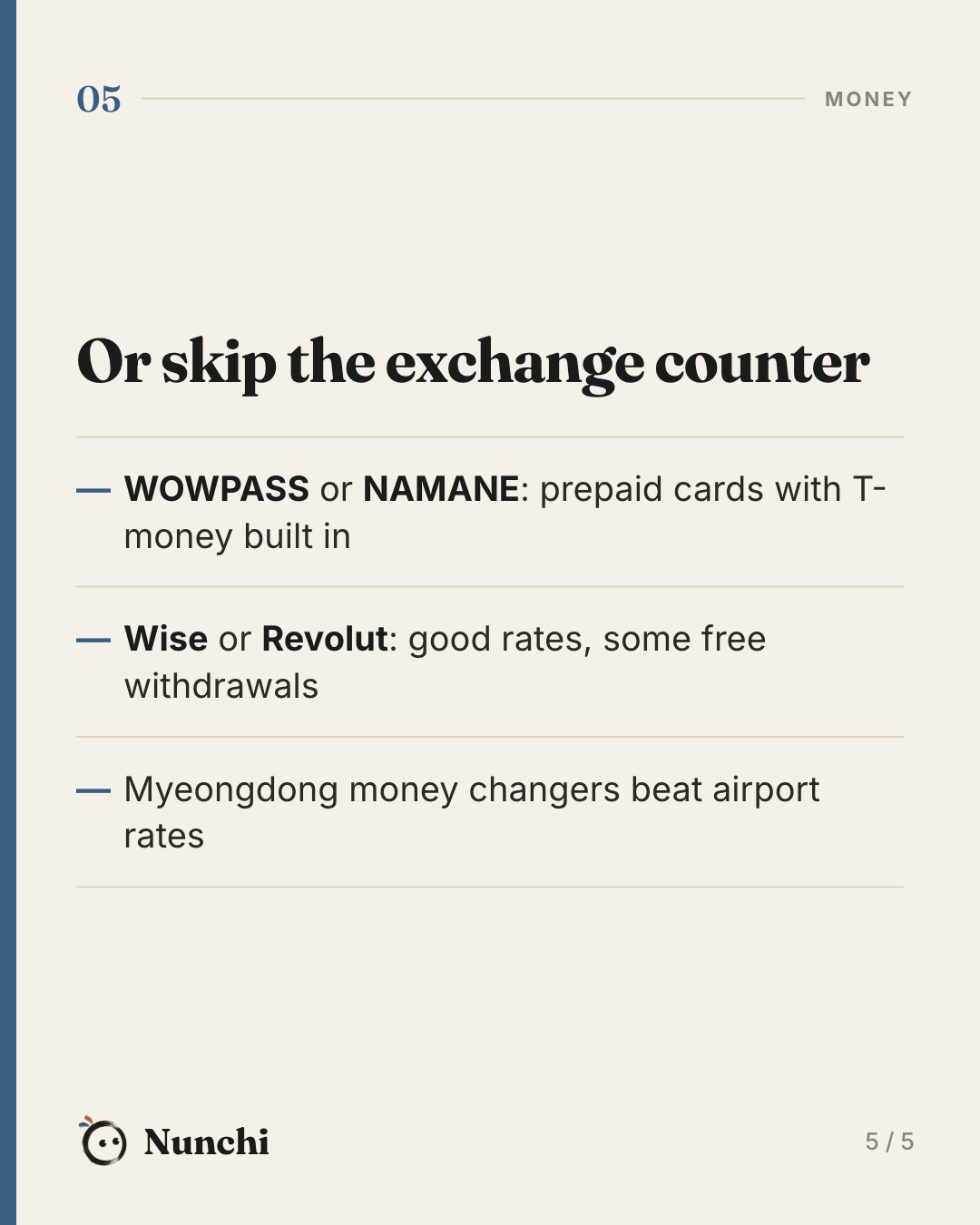
Change only a little at the airport. Rates there are noticeably worse. In Seoul, the licensed money changers in Myeongdong usually give the best rates for cash, and banks are fine too. Or skip exchange altogether with one of the cards below.
Prepaid tourist cards
| Card | What it does |
|---|---|
| WOWPASS | Exchange cash at its kiosks into a prepaid payment card with T-money built in. Pause it in the app if lost. |
| NAMANE | Prepaid payment and transit card sold at airport and station kiosks. Leftover balance can be refunded when you leave. |
| Wise / Revolut | Your own multi-currency card from home. Good rates, and Revolut gives some fee-free ATM withdrawals each month (the ATM's own fee can still apply). |
iPhone users can now add T-money to Apple Wallet: open the Tmoney app, tap "Foreigner" and top up with Mastercard or Amex (not Visa). Then just tap your phone at the gate.
Tipping and tax
There's no tipping in Korea, and staff may hand it back. Some upscale hotels and restaurants add a 10% service charge, shown on the bill as 봉사료 (bongsaryo). Prices on tags already include tax.
Shopping? At stores marked Tax Free, purchases of ₩15,000 or more can get part of the VAT back, often instantly at the till with your passport.