How to pay
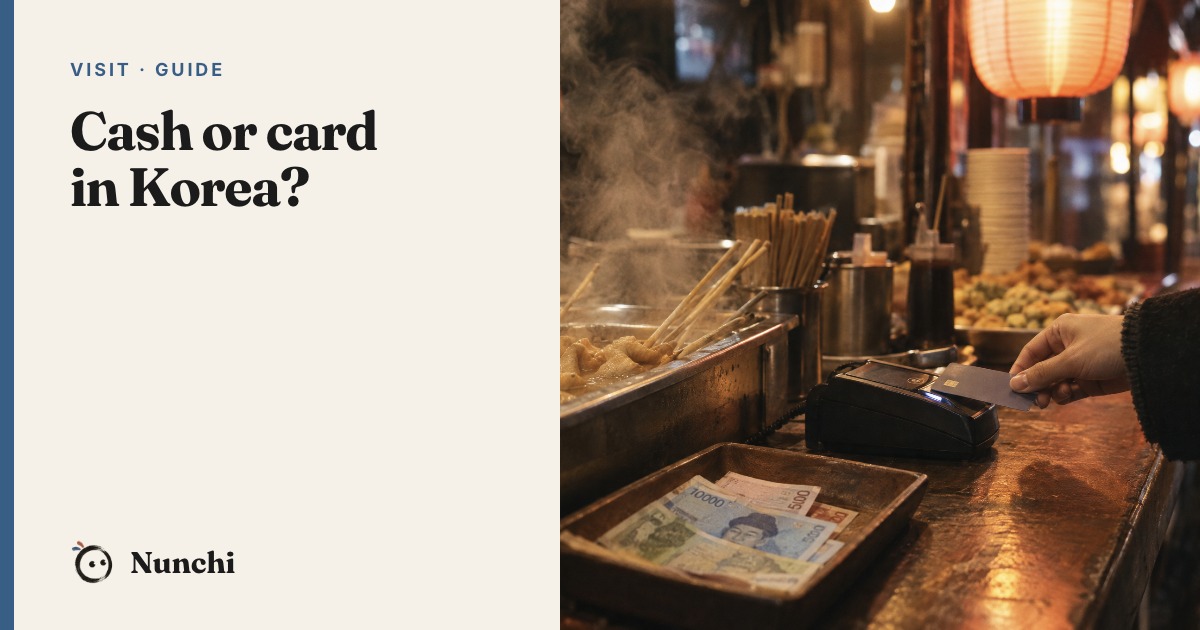
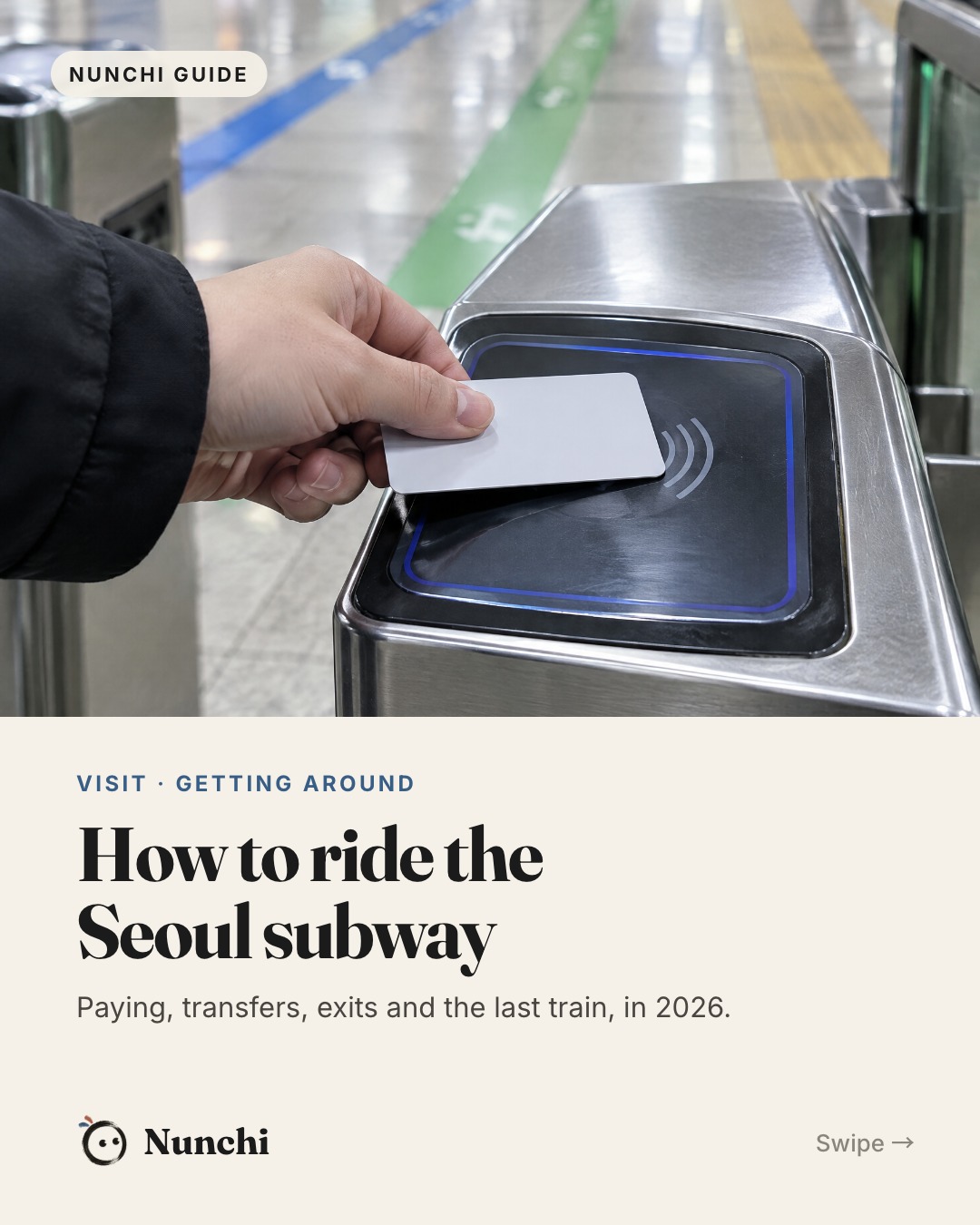
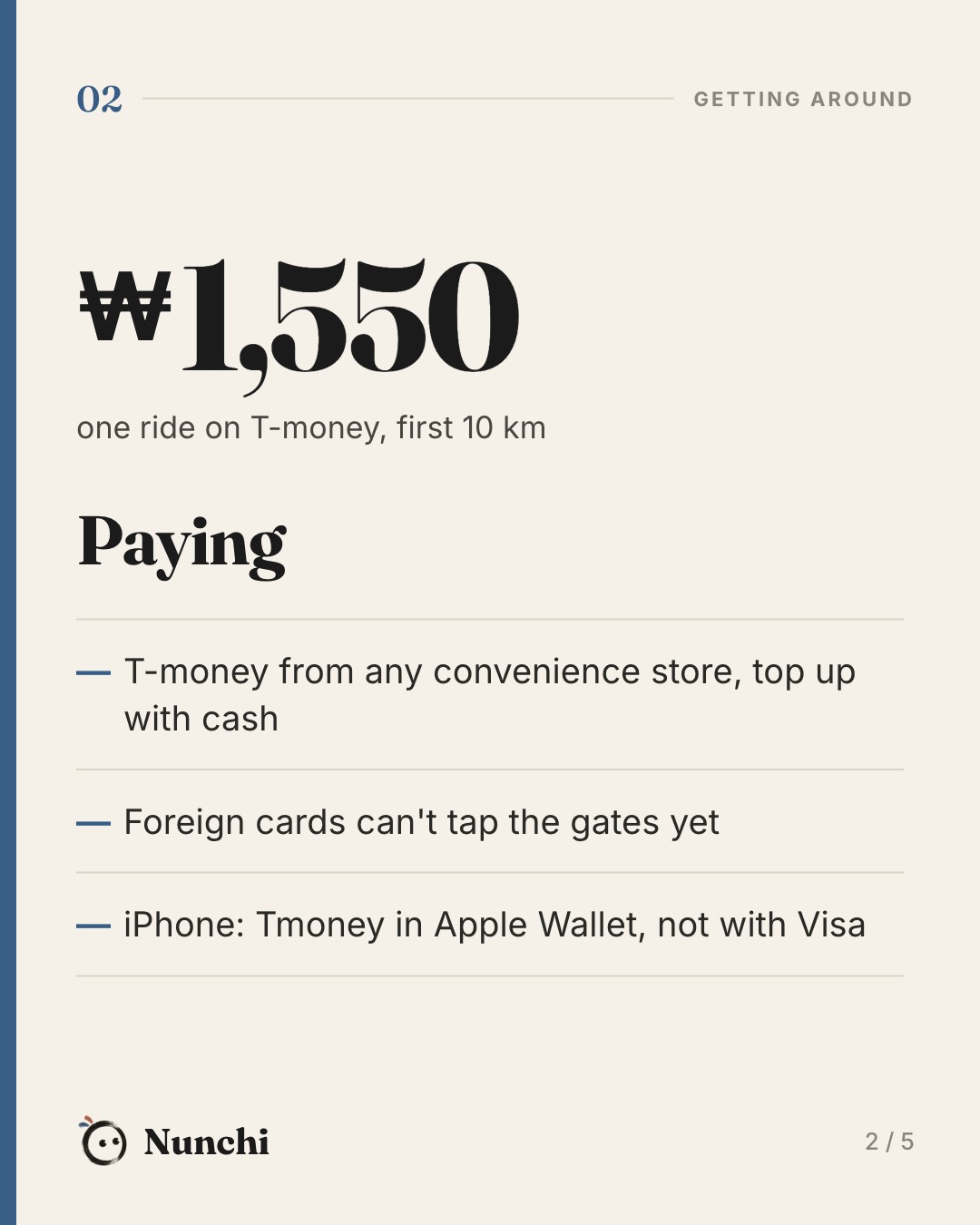
Buy a T-money card at any convenience store (CU, GS25, 7-Eleven, Emart24) for about ₩3,000–5,000, load it with cash and tap it on the gate going in and coming out. A ride costs ₩1,550 for the first 10 km, plus about ₩100 for each extra 5 km. The fare went up from ₩1,400 on 28 June 2025, so older guides are out of date.
To top up, use the machines in any station (cash only for T-money) or hand the card and cash over at a convenience-store counter: 티머니 만 원 충전해 주세요 (timoni man won chungjeonhae juseyo, "please put ₩10,000 on my T-money").
| Option | Cost | Good for |
|---|---|---|
| T-money card | ₩1,550 a ride | Everything: subway, buses, AREX, other cities |
| Climate Card tourist pass | ₩5,000 (1 day) to ₩20,000 (7 days) | Lots of rides inside Seoul |
| Single-journey ticket | ₩1,650 + ₩500 deposit | One-off ride, no card |
| T-money in Apple Wallet | ₩1,550 a ride | iPhone users with Mastercard or Amex |
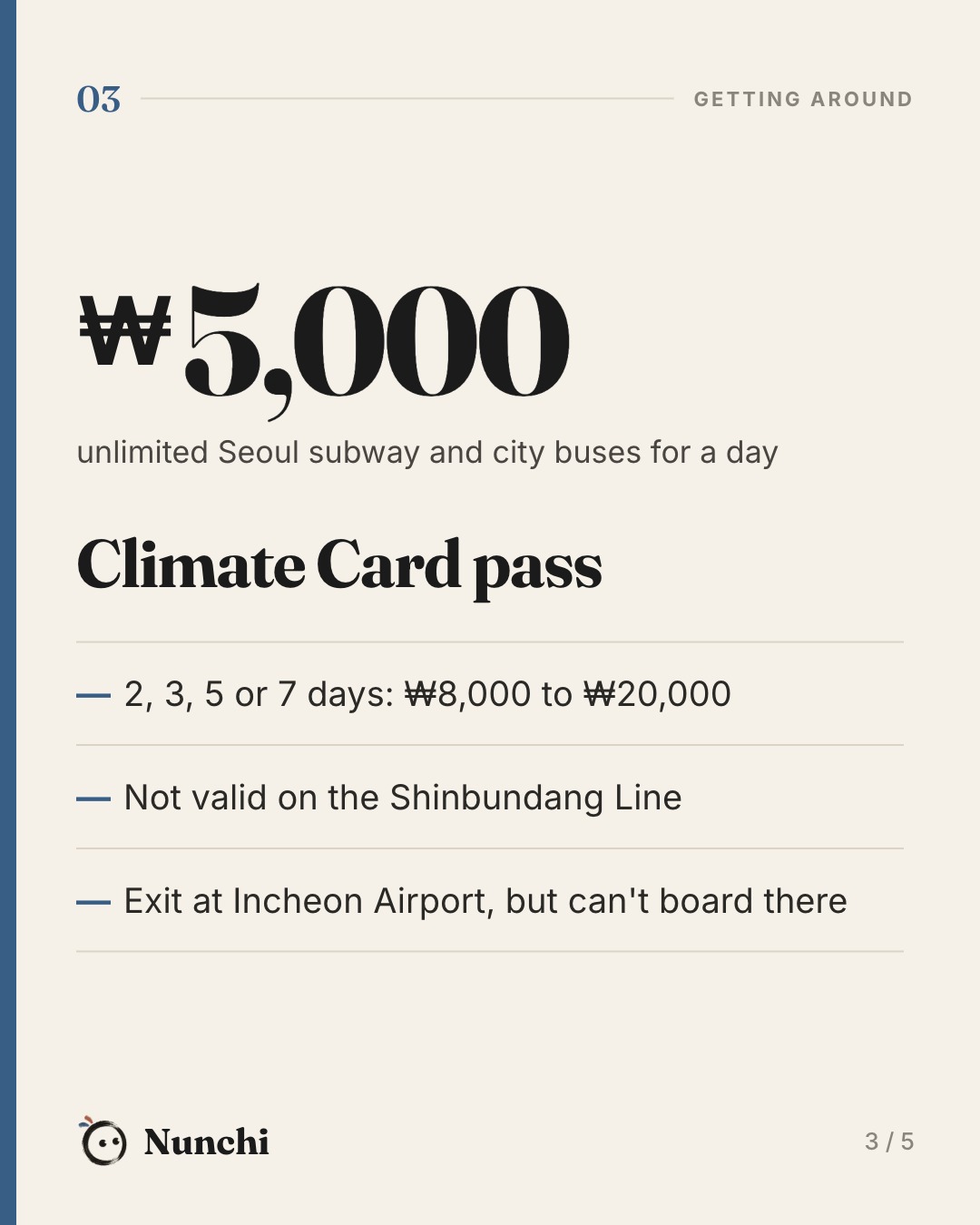
Climate Card (기후동행카드, gihu donghaeng kadeu) tourist passes give unlimited rides on Seoul subway and Seoul city buses: ₩5,000 for 1 day, ₩8,000 for 2, ₩10,000 for 3, ₩15,000 for 5 and ₩20,000 for 7. The card itself costs ₩3,000, and the pass starts the moment you load it. It doesn't cover the Shinbundang Line or trips beyond Seoul. You can ride it to Incheon Airport and exit there, but you can't board with it at the airport. Not sure which wins for your trip? Run the numbers in our T-money vs Climate Card calculator.
Foreign contactless cards: you can't tap a Visa or Mastercard at the gates yet. Since March 2026 you can use one at 440 ticket machines on Lines 1–8 to buy single tickets and Climate Card passes, with a service fee of about 3.7%. Tap-to-ride with a foreign card is planned for Seoul city buses in 2027, not the subway.
iPhone: since March 2026 the Tmoney app has a "Foreigner" button. Top up with Mastercard, American Express or UnionPay (not Visa) and add the card to Apple Wallet, then tap your phone at the gate.
Transfers
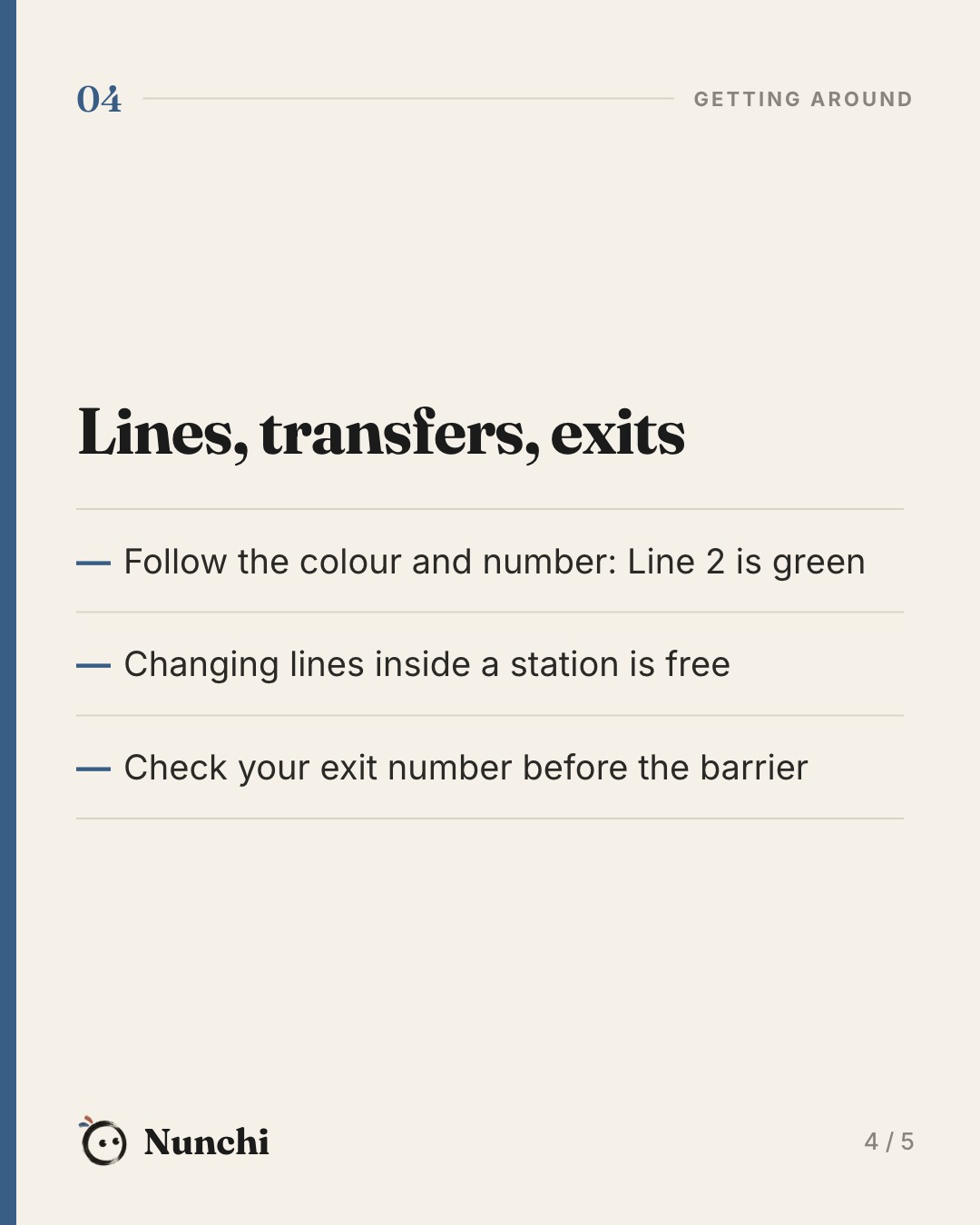
Changing lines inside a station is free: follow the coloured signs for your next line and you never pass a gate. Switching between the subway and a bus is discounted too, if you tap out and board within 30 minutes (1 hour between 9pm and 7am), for up to four transfers. Look for 환승 (hwanseung, transfer) on signs. Tapping in before 6:30am gets you an early-bird discount.
Line colours and numbers
Locals talk about lines by number and colour, and every sign follows the same scheme:
| Line | Colour | Useful for |
|---|---|---|
| 1 | Dark blue | Seoul Station, Jongno, Dongdaemun |
| 2 | Green | Hongdae, City Hall, Seongsu, Gangnam (a loop) |
| 3 | Orange | Gyeongbokgung, Anguk (Insadong) |
| 4 | Sky blue | Myeongdong, Seoul Station |
| 5 | Purple | Gwanghwamun, Yeouido |
| 6 | Brown | Itaewon |
| 7 | Olive | Konkuk Univ., Cheongdam |
| 8 | Pink | Jamsil |
| 9 | Gold | Gimpo Airport, Yeouido, Sinnonhyeon |
Each station also has a number, shown on signs and maps: Sinnonhyeon on Line 9 is 925, for example. Line 2 runs in a circle, so check the direction by the name of the next station, not the end of the line. Announcements are in Korean and English, with Japanese and Chinese at major stations.
Exit numbers
Big stations have a dozen or more numbered exits (출구, chulgu), and the wrong one can leave you 10 minutes' walk from where you meant to be. Directions in Naver Map and KakaoMap tell you which exit to use, so check before you reach the barrier. Restaurants and hotels often give directions as "Exit 3, walk 200 m". To ask: 몇 번 출구예요? (myeot beon chulgu-yeyo?, "which exit number?").
Line 9 express trains
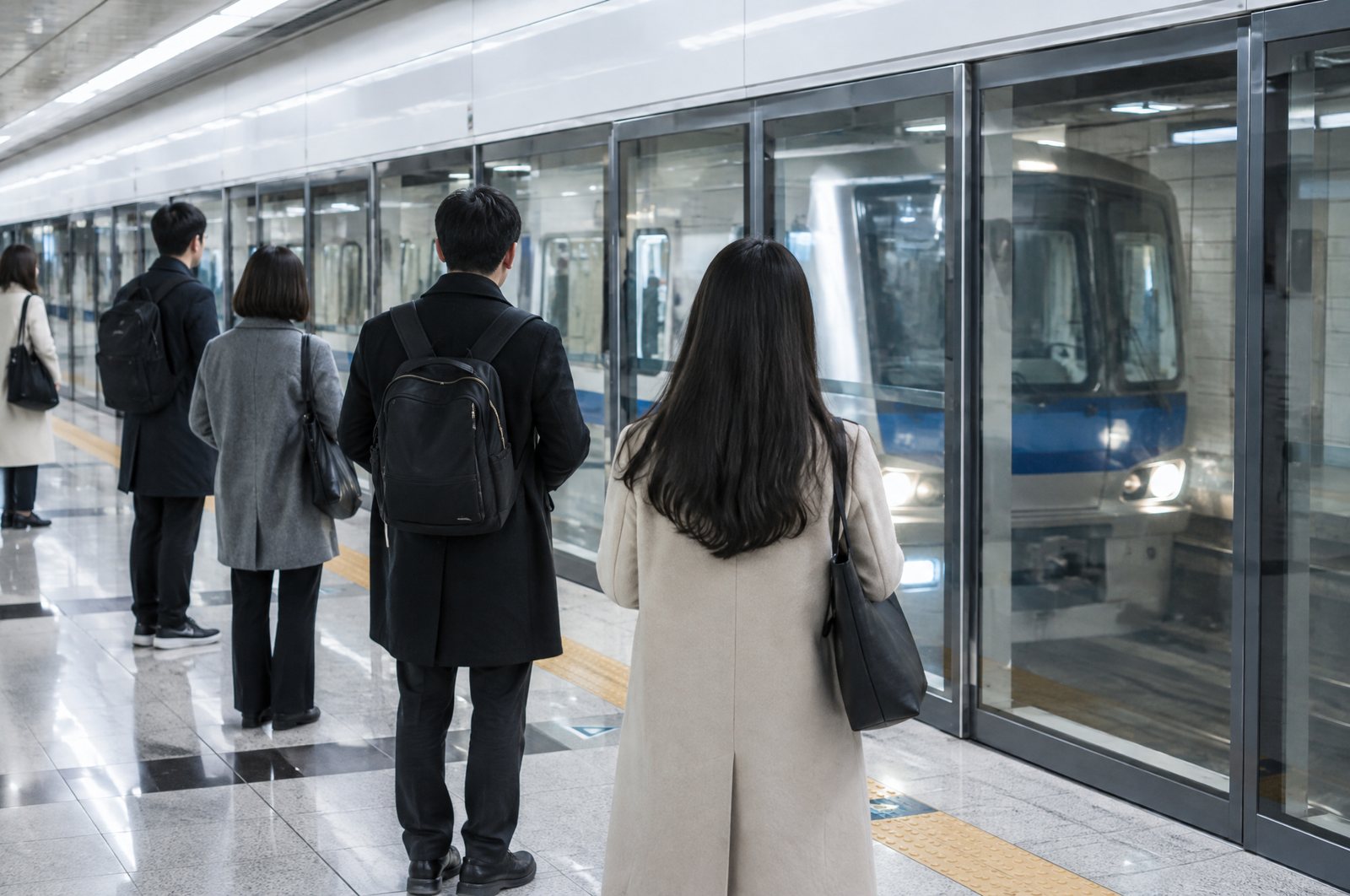
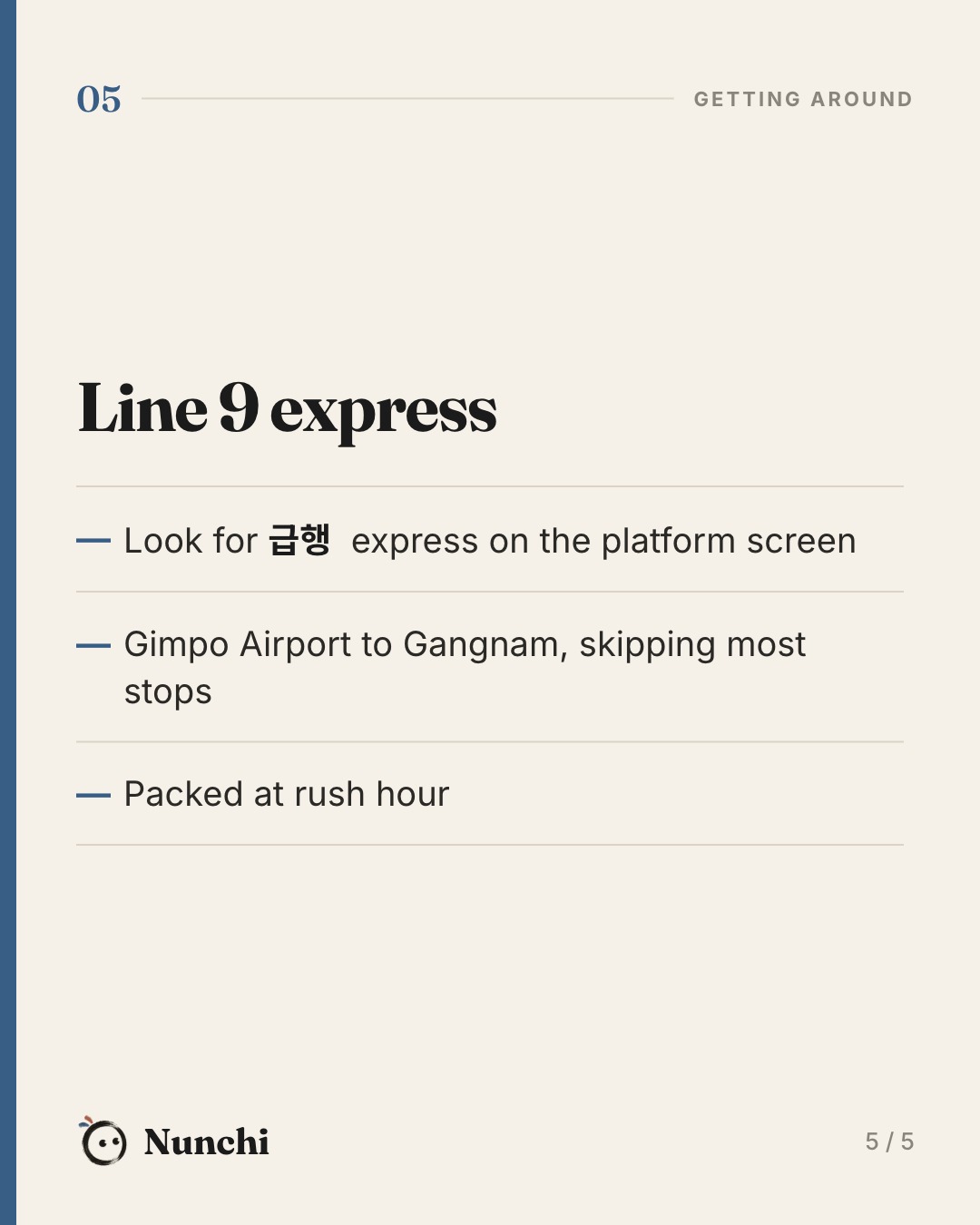
Line 9 runs express trains (급행, geuphaeng) that skip most stations between Gimpo Airport and VHS Medical Center, stopping at places like Yeouido, Express Bus Terminal, Sinnonhyeon, Sports Complex and Olympic Park. They run about five times an hour each way, and the platform screens show whether the next train is express. It's the quickest way from Gimpo Airport to Gangnam, but express trains are packed at rush hour.
Last trains
The subway runs from about 5:30am to around midnight, and some lines keep going until about 1am on weekdays. The last train (막차, makcha) depends on the station, the direction and the day, and a connecting line can stop earlier than yours. Check the last train at your transfer station in Naver Map before a late night. After that, it's a night bus or a taxi.
Apps
Naver Map is the one to install: English directions with exit numbers, transfer times and the last train. KakaoMap does the same, with more of it in Korean. For the subway alone, Seoul Metro's Seoul Subway app shows real-time trains and how crowded each car is, and Subway Korea has maps for Seoul and other cities. More in our Korea travel apps guide.
Etiquette
- Pink seats (임산부 배려석, imsanbu baeryeoseok, "seat for pregnant women") have been on Seoul trains since 2013. Leave them empty, even on a quiet train.
- Priority seats (노약자석, noyakjaseok) at the ends of each car are for older, disabled and pregnant passengers. Don't sit there.
- Let people off before you board, stand to one side of the doors, and keep calls short and quiet.
- Take your backpack off on a crowded train and hold it in front of you.
Changing to a bus? Tap the reader by the back door when you get off too. Skip it and the transfer discount breaks, so your next ride costs the full fare again.