1. Find a clinic, not a hospital
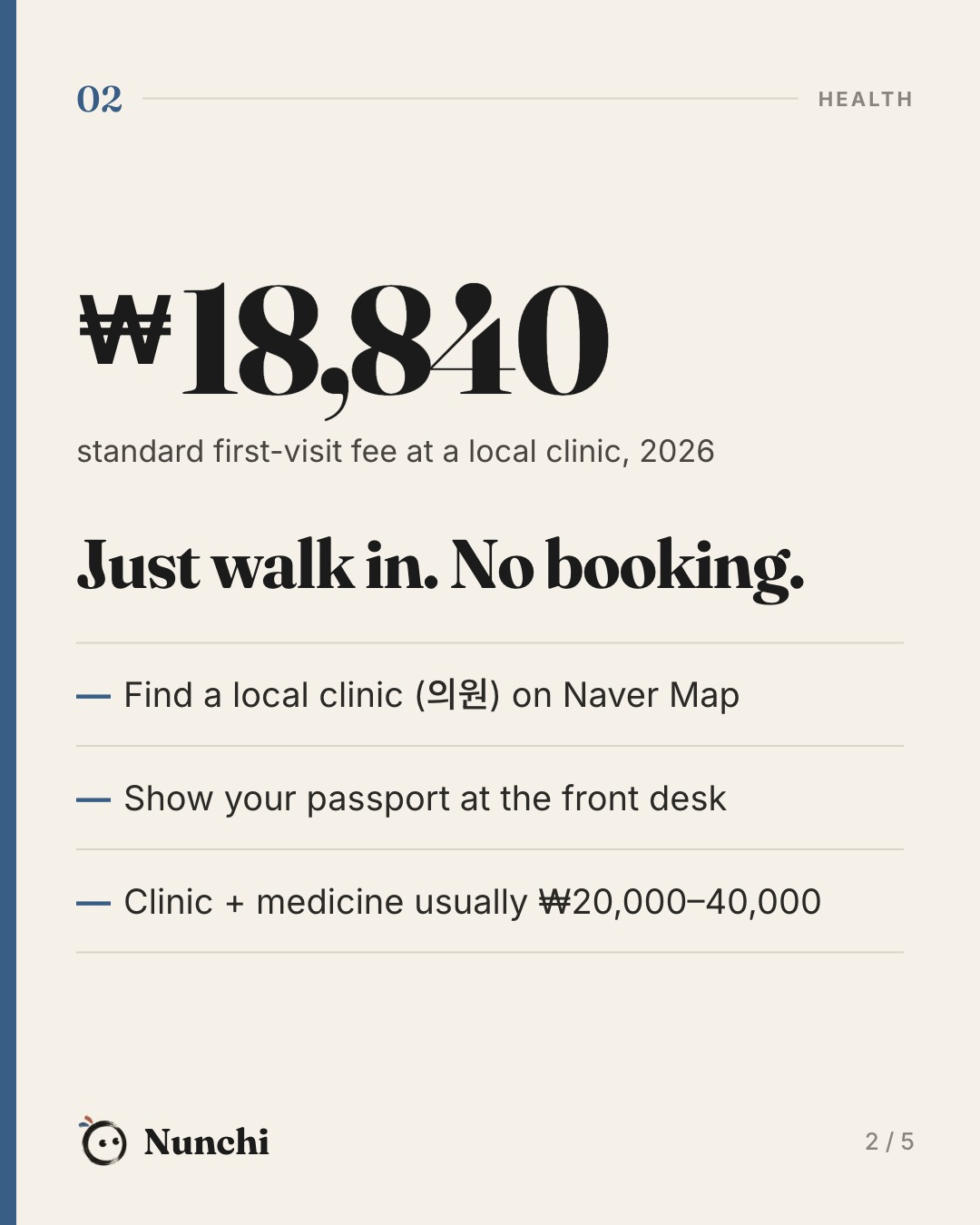
For a cold, a stomach bug, an ear infection or a sprained ankle, go to a neighbourhood clinic, called a 의원 (ui-won). They are on almost every street above shops and cafés. They take walk-ins, the wait is short, and they cost a fraction of a big hospital.
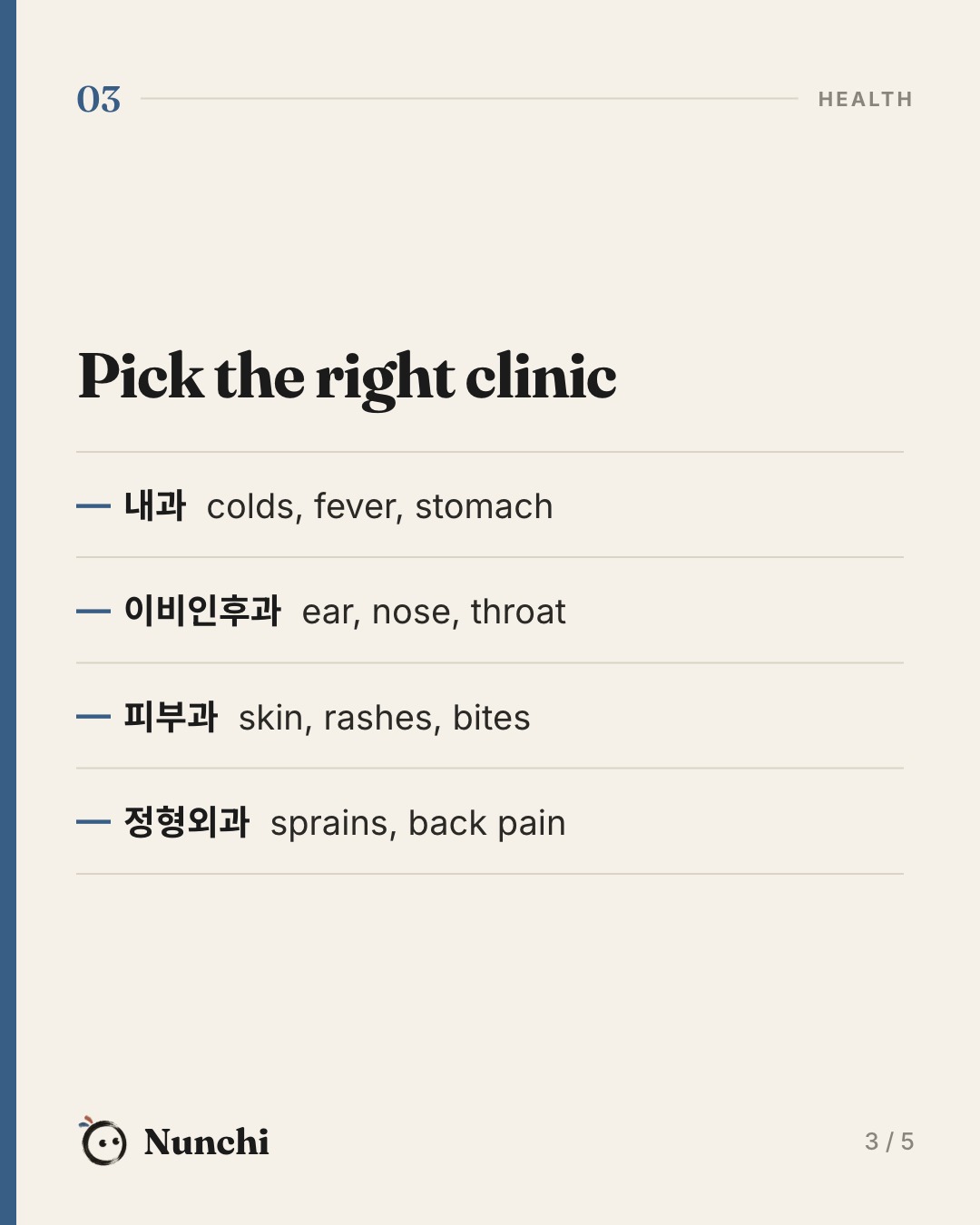
Clinics specialise, so pick by what's wrong. Search the Korean word on Naver Map or Kakao Map and choose one that's open now.
| Search for | Go there for |
|---|---|
| 내과 nae-gwa | Colds, fever, flu, stomach, blood pressure. When unsure, start here. |
| 이비인후과 i-bi-in-hu-gwa | Ears, nose, throat, sinus |
| 피부과 pi-bu-gwa | Rashes, allergies, insect bites |
| 정형외과 jeong-hyeong-oe-gwa | Sprains, back and joint pain |
| 안과 an-gwa | Eyes |
University hospitals will also see you without a referral, but uninsured fees there are much higher. Save them for something serious.
2. At the front desk
Hand over your passport and say what's wrong. Pointing at the body part works. You'll fill in a short form, wait (often 10–30 minutes), see the doctor for a few minutes, and pay at the desk on the way out. Most clinics open on weekdays and Saturday mornings and close for lunch around 1–2pm.
What it costs
Short-term visitors can't join Korea's national health insurance, so you pay the full, uninsured price. That is still cheap by most countries' standards. The official first-visit consultation fee at a clinic is ₩18,840 in 2026. Clinics can charge visitors more, and tests or injections are extra.
One real example: a traveller on Reddit in October 2026 paid ₩18,800 for the visit and ₩18,500 for 15 days of blood-pressure medicine. An emergency room is a different story. Expect roughly ₩150,000–500,000 uninsured.
3. The pharmacy step
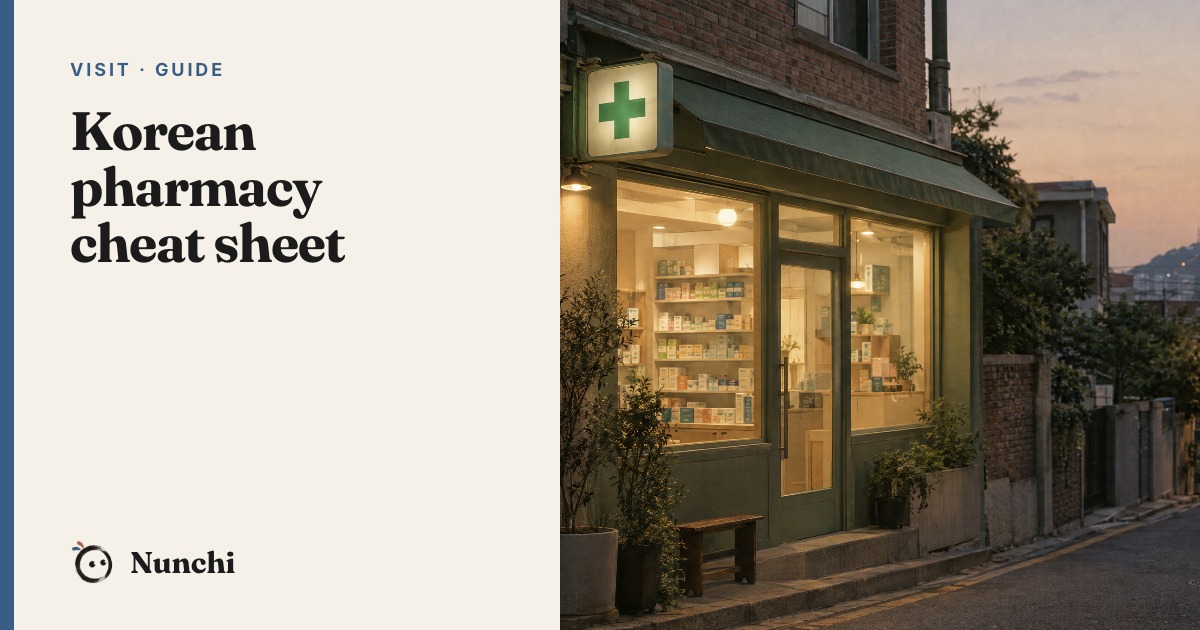
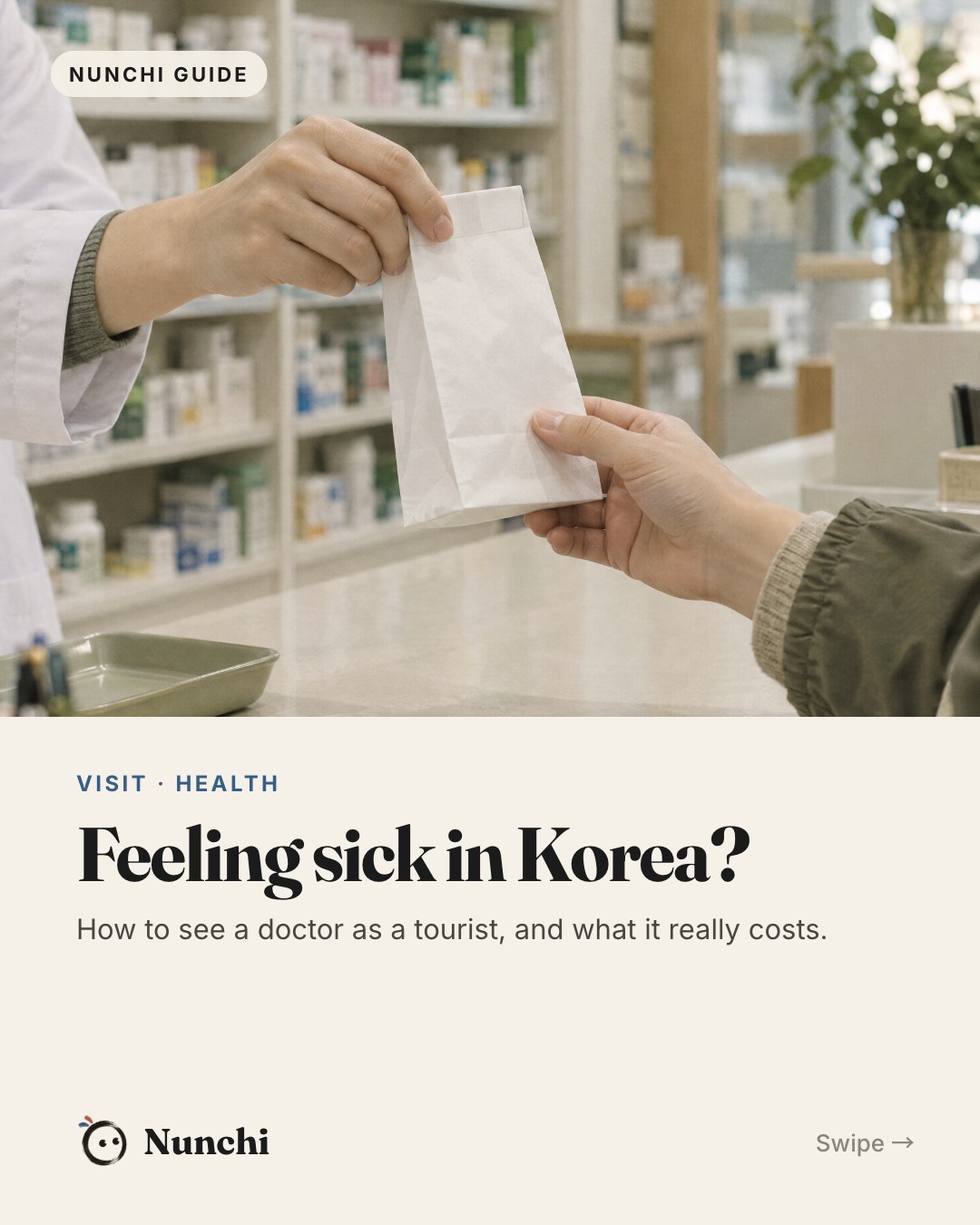
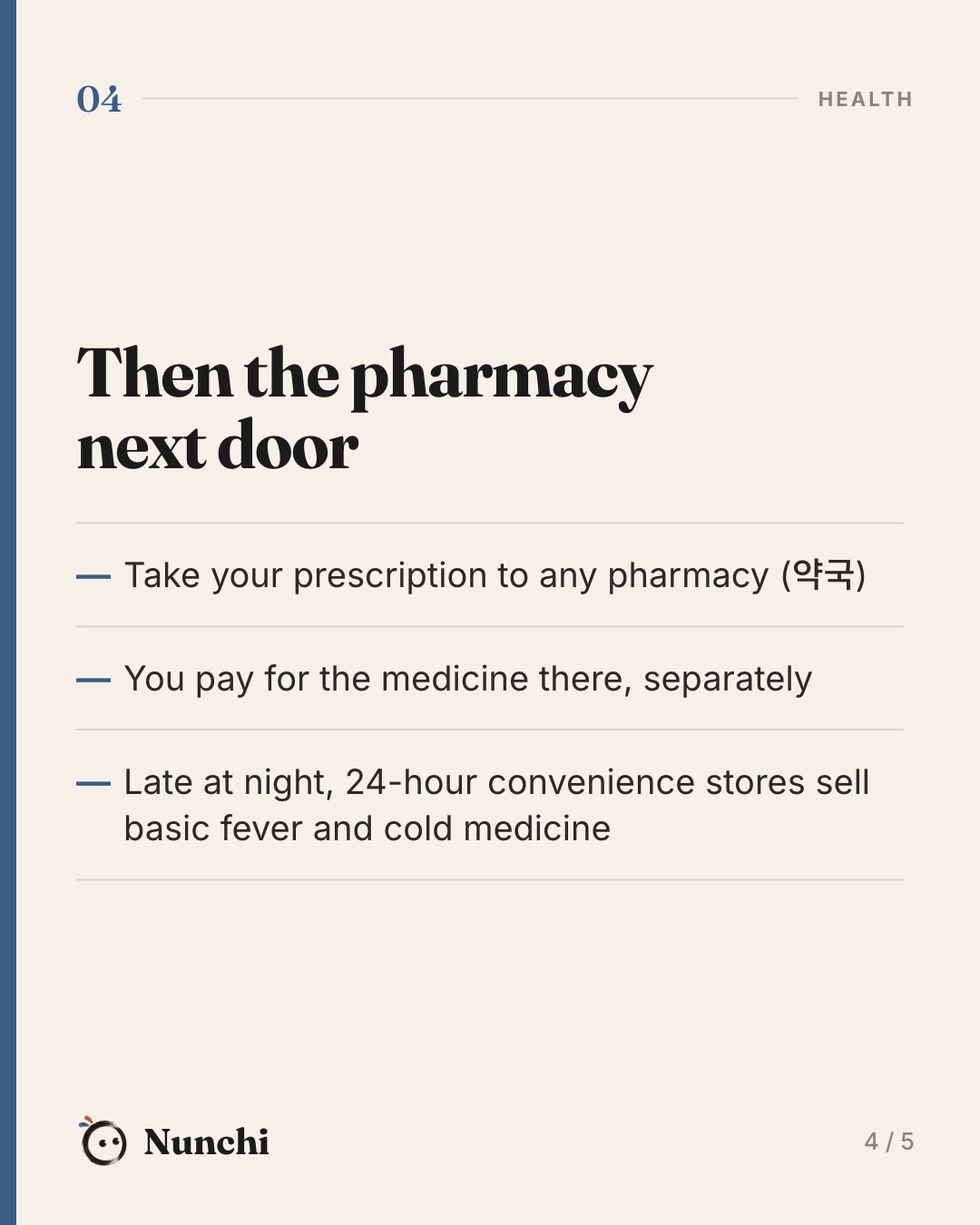
Korean clinics don't hand out medicine. You get a printed prescription, walk to a pharmacy (약국, look for the green cross, usually right downstairs) and pay there. Pharmacies also sell everyday medicine without a prescription. Just describe your symptoms.
At night, at weekends, on holidays
- Convenience stores open 24 hours sell a short list of approved medicines: fever and pain relief, cold medicine, digestive aids and pain patches. One day's dose per pack.
- Late-night and holiday pharmacies are designated by each city. Search open hospitals and pharmacies on E-Gen, the national emergency medical information site (Korean, but the map works).
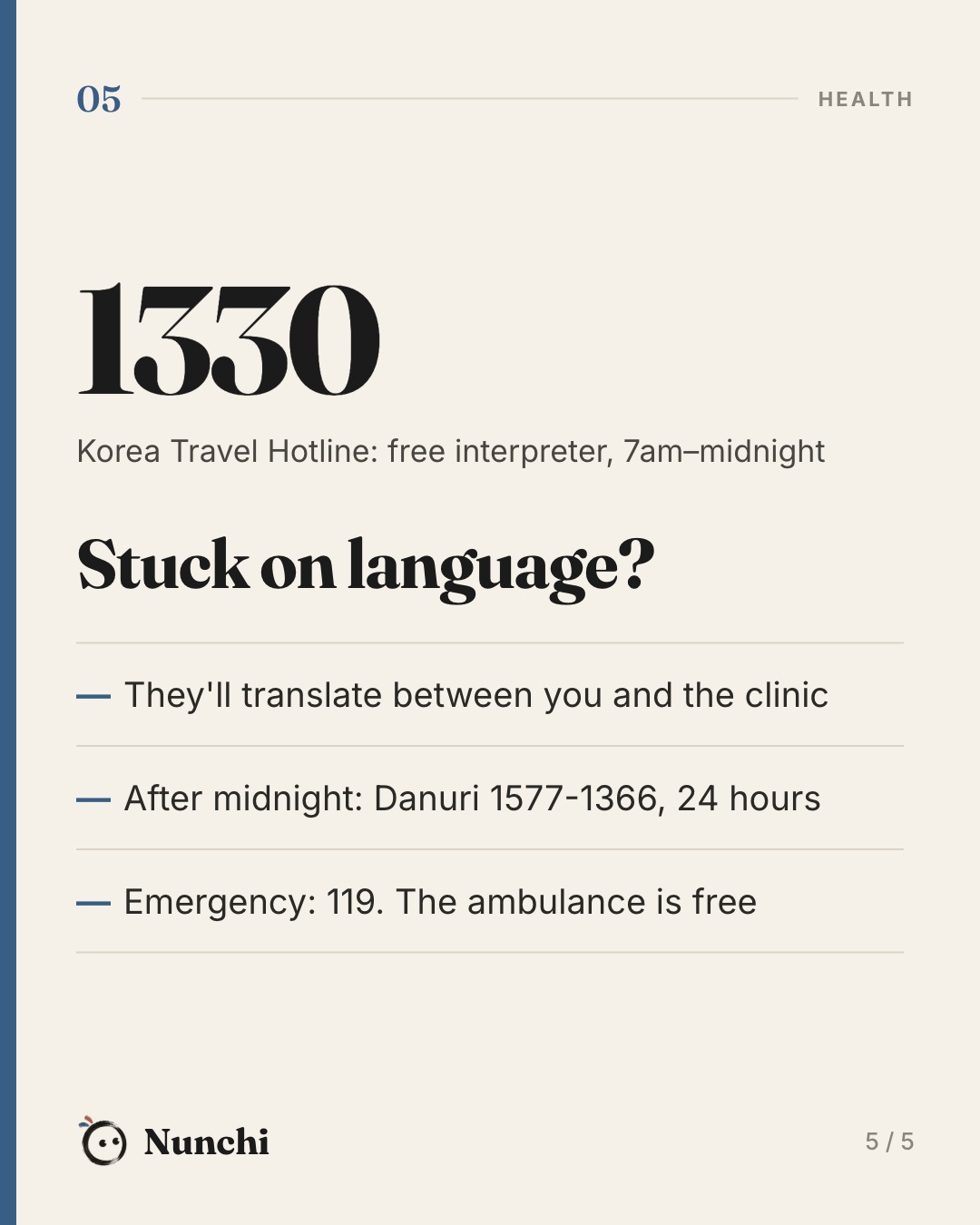
- Emergencies: call 119. The ambulance is free; the hospital bills you separately.
Getting help in English
- 1330 Korea Travel Hotline: free, 7am to midnight, in English and seven other languages. They can join a three-way call with the clinic or with emergency services. From a foreign phone, dial +82-2-1330.
- Danuri 1577-1366: 24-hour interpretation when 1330 is closed.
- International clinics at big Seoul hospitals have English-speaking staff and handle insurance paperwork. They cost more and usually need booking. Two to know: Severance International Health Care Center in Sinchon (02-2228-5800) and Seoul National University Hospital's International Healthcare Center (02-2072-2890).
Bring your medicine packets or a photo of the label. Korean pharmacists are quick to match a foreign brand to the local equivalent, and it saves a lot of miming.
For your travel insurance claim
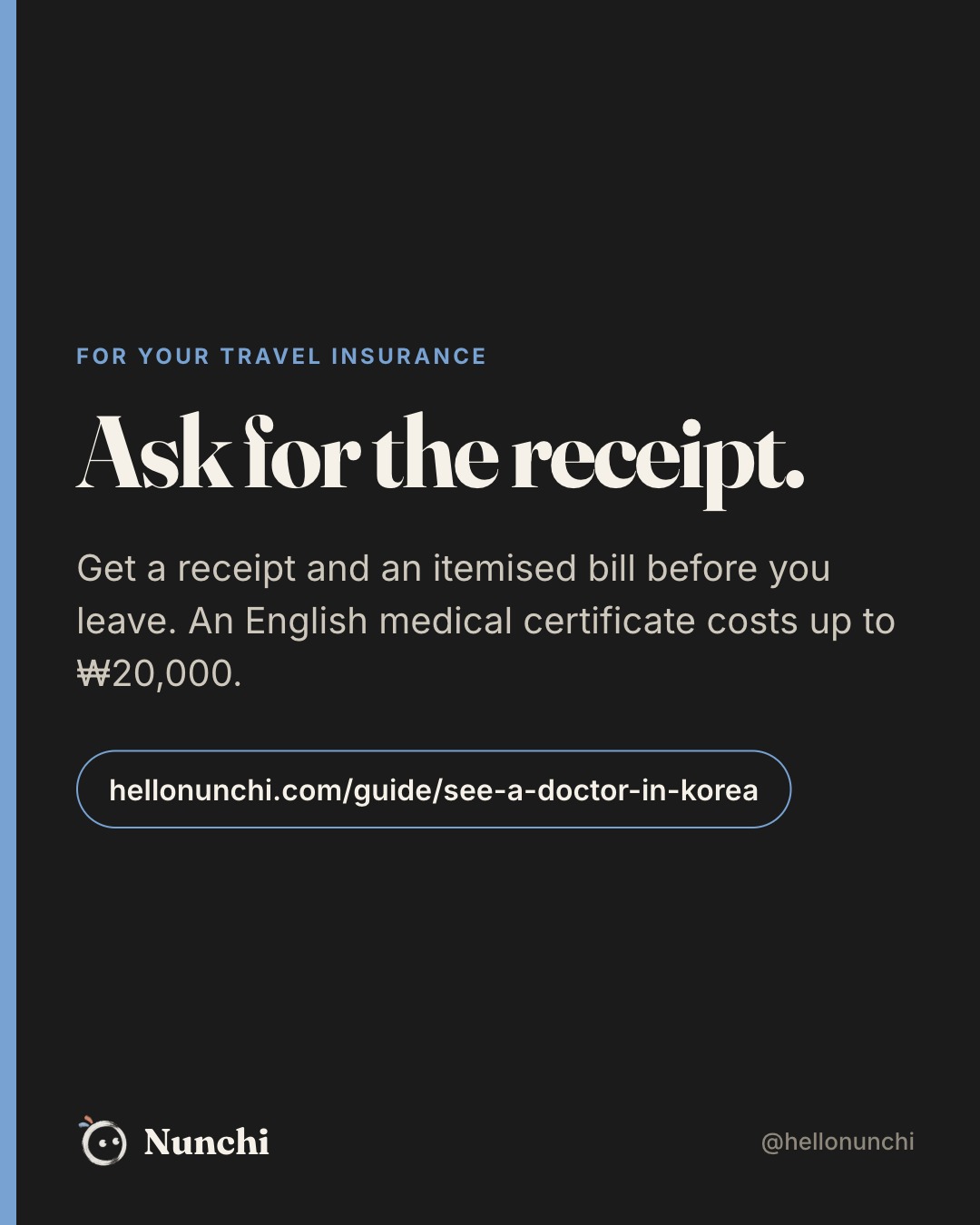
Before you leave the desk, ask for the receipt (영수증) and the itemised bill (진료비 세부내역서), which is usually free. If your insurer wants a diagnosis, ask for an English medical certificate. By law it costs no more than ₩20,000. Keep the pharmacy receipt too.