Sit down, order on the table tablet or by calling a server, eat, then pay at the counter by the door on your way out. Side dishes and water are free, refills too, nobody expects a tip, and the price on the menu is what you pay.
Getting a table
At most places you just walk in. Staff will ask 몇 분이세요? (myeot buniseyo?, "how many?"). Answer 한 명이요 (han myeong-iyo, one) or 두 명이요 (du myeong-iyo, two), or hold up fingers.
Popular restaurants have queues, and Korean waitlist systems usually want a Korean phone number. Use CatchTable Global instead: foreign visitors can sign up with an email address and book or join waitlists in English. Seoul city partnered with the app so tourists without a Korean number could do this. Our travel apps guide covers the rest of your phone setup.
Many smaller restaurants close between lunch and dinner, roughly 2 or 3pm to 5pm. Check the hours on Naver Map before you go.
Ordering
- Tablet on the table: more and more restaurants have one. Look for a language button on screen. KT's Hi-Order, one of the biggest systems, offers 13 foreign languages and lets you pay and split the bill at the table.
- Kiosk by the door: common at noodle, gimbap and fast-food places. Order and pay first, then wait for your number. If the kiosk refuses your foreign card, show it to staff at the counter.
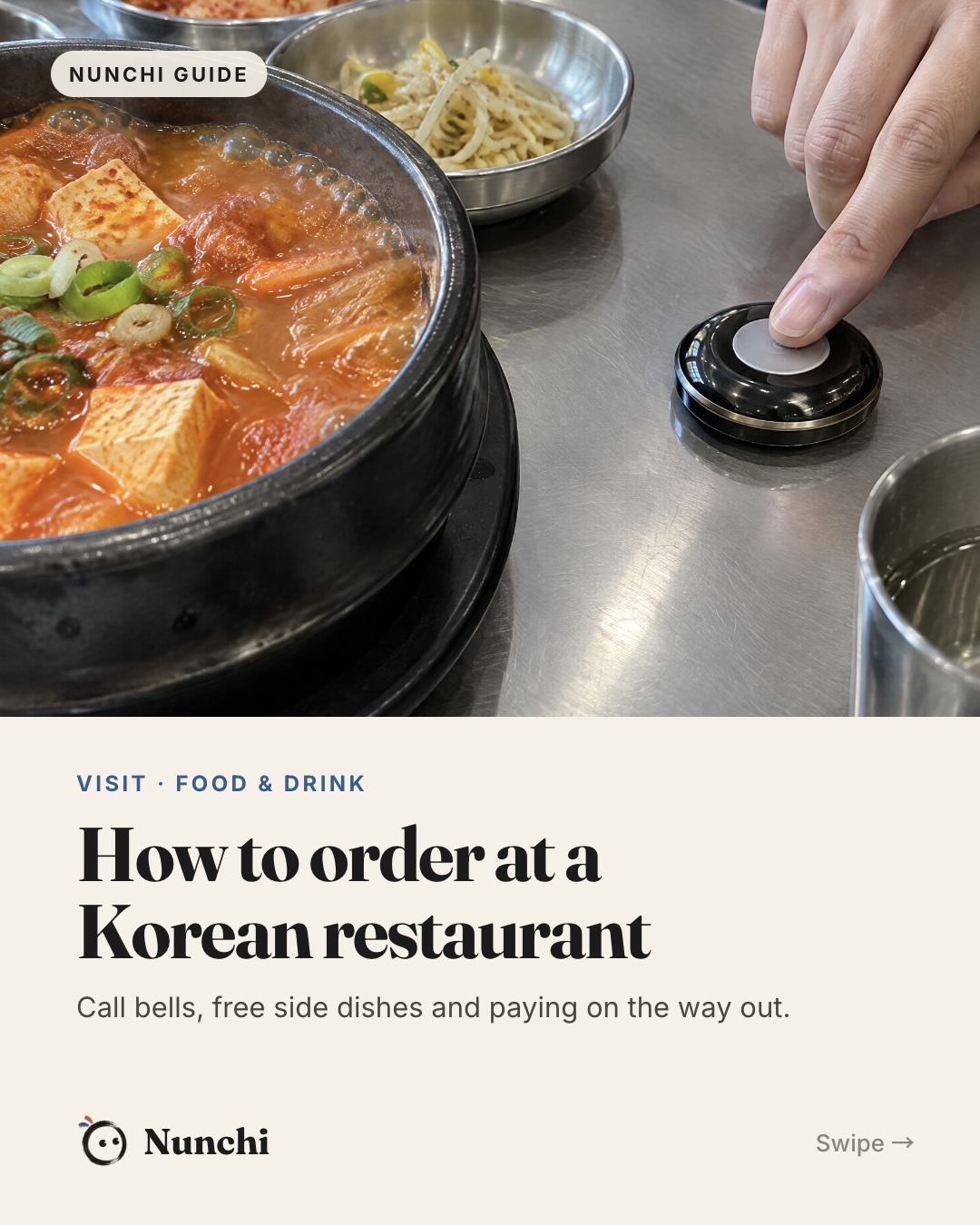
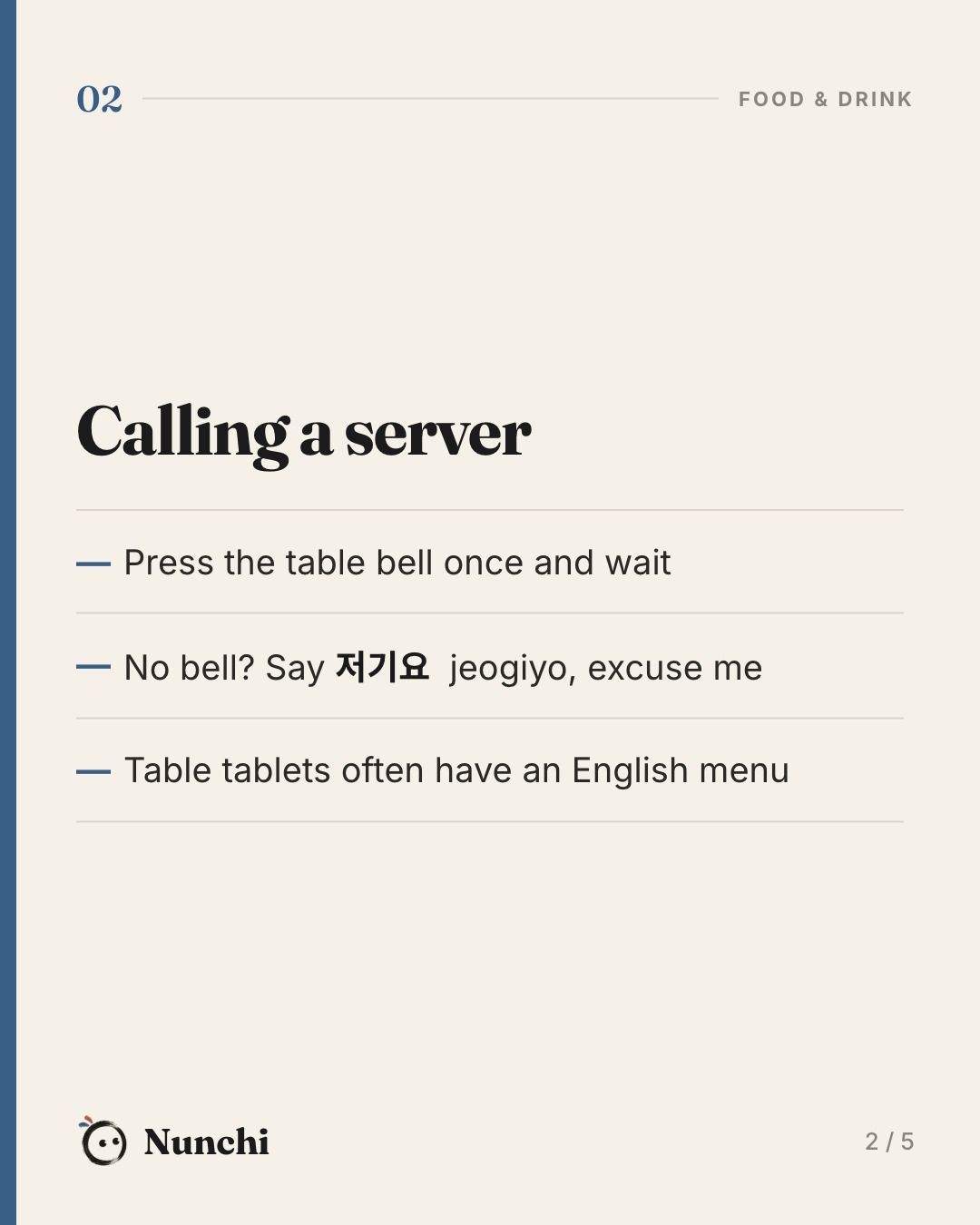
- Call bell: no tablet? Look for a small button on the edge of the table or underneath it. Press it once and wait. No bell: raise a hand and say 저기요 (jeogiyo) or 여기요 (yeogiyo), both meaning "excuse me".
- Point and ask: 이거 주세요 (igeo juseyo, "this, please") works with any menu photo. Add a number: 이거 두 개 주세요 (igeo du gae juseyo, "two of these").
Free side dishes and water
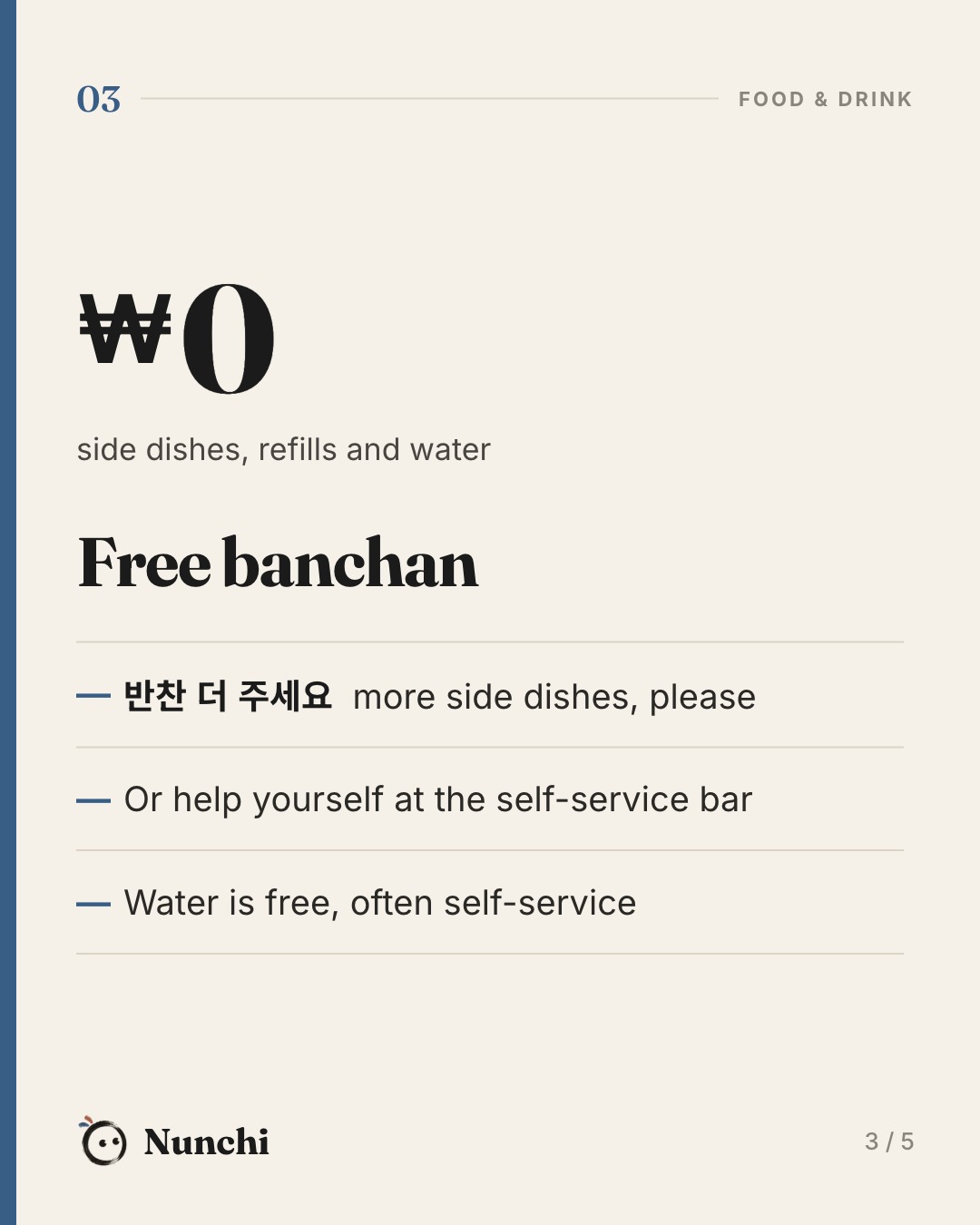
Banchan, the small side dishes that come with your meal, are free, and so are refills. Ask with 반찬 더 주세요 (banchan deo juseyo, "more side dishes, please") or help yourself at the self-service bar many restaurants now have. Refills cover the side dishes, not the main.
Water is free too, but it's often self-service. Look for a fridge or dispenser and a sign saying 물은 셀프 (mureun selpeu, "water is self-service"). Spoons and chopsticks are often in a drawer in the side of the table.
Eating alone and the two-portion rule
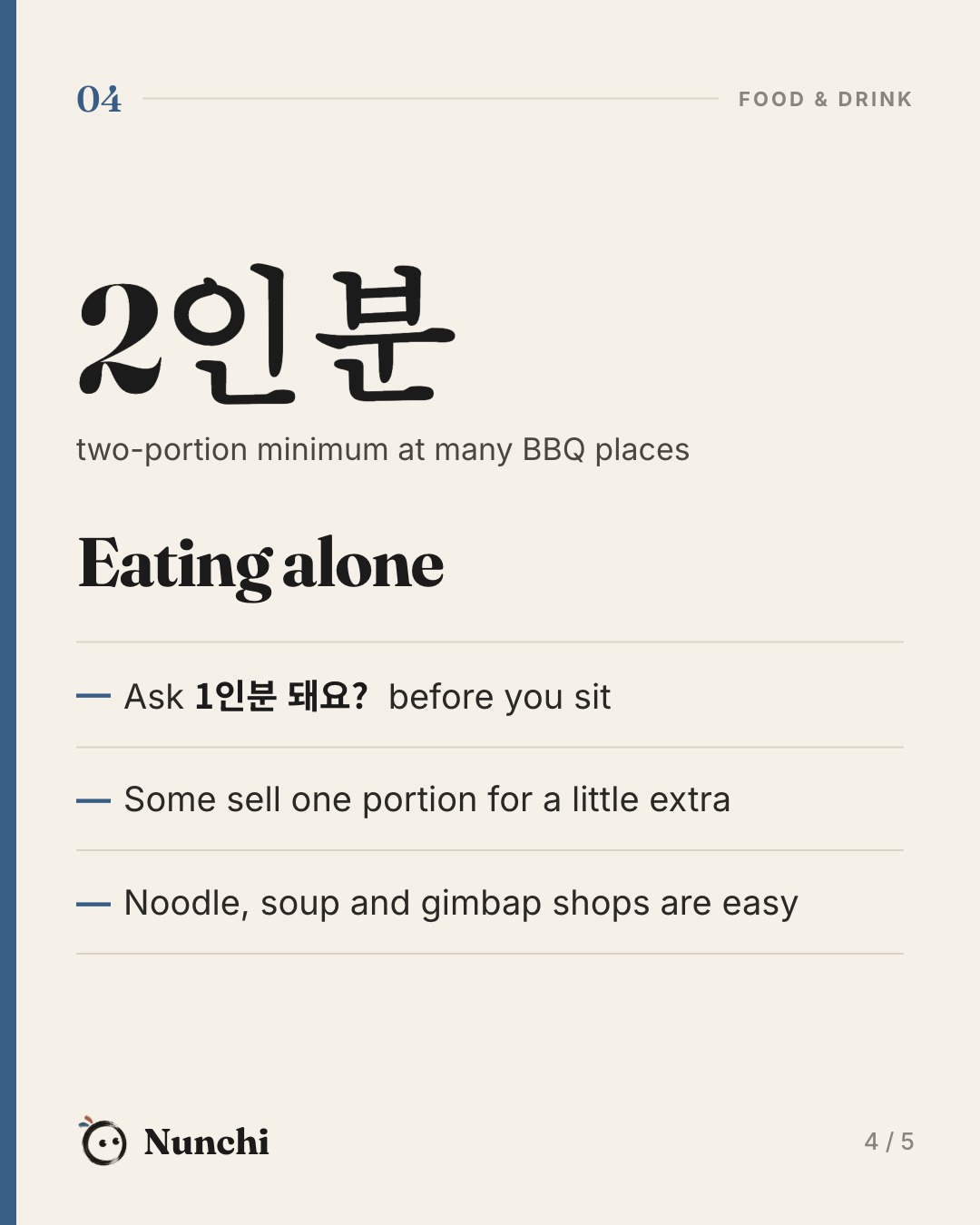
Korean BBQ and other dishes cooked at the table for sharing are often sold in a minimum of two portions (2인분, i-inbun). Some restaurants also turn solo diners away at busy times. It's legal: Korea's Fair Trade Commission says it's up to the owner. In 2025 only about 1 in 10 restaurants offered a single-person meal.
- Ask at the door: 1인분 돼요? (ir-inbun dwaeyo?, "can I order one portion?"). Some places will sell you one for a small surcharge.
- Or order two portions and take the rest away: 포장해 주세요 (pojanghae juseyo, "to go, please").
- Easy solo meals: noodle and soup shops, gimbap places, food courts and BBQ restaurants with single grills.
Things are slowly changing. After a solo diner's video went viral in July 2025, the southern city of Yeosu told its restaurants not to push lone customers into ordering two portions.
Spice and sharing
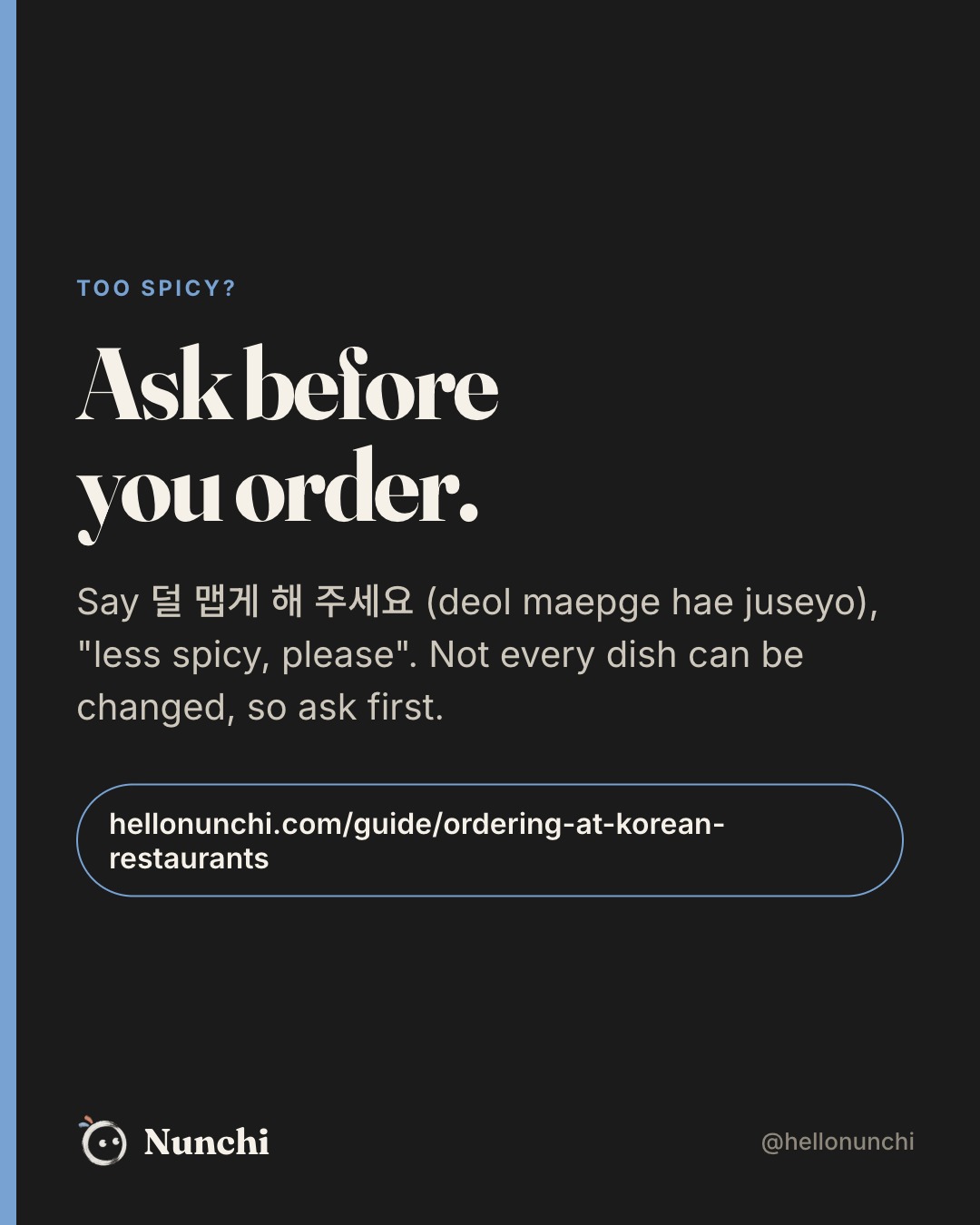
Say 덜 맵게 해 주세요 (deol maepge hae juseyo, "less spicy, please") or 안 맵게 해 주세요 (an maepge hae juseyo, "not spicy, please") when you order. Not every dish can be changed, so ask 많이 매워요? (mani maewoyo?, "is it very spicy?") first. Not sure how much heat you can take? Try the spice level quiz.
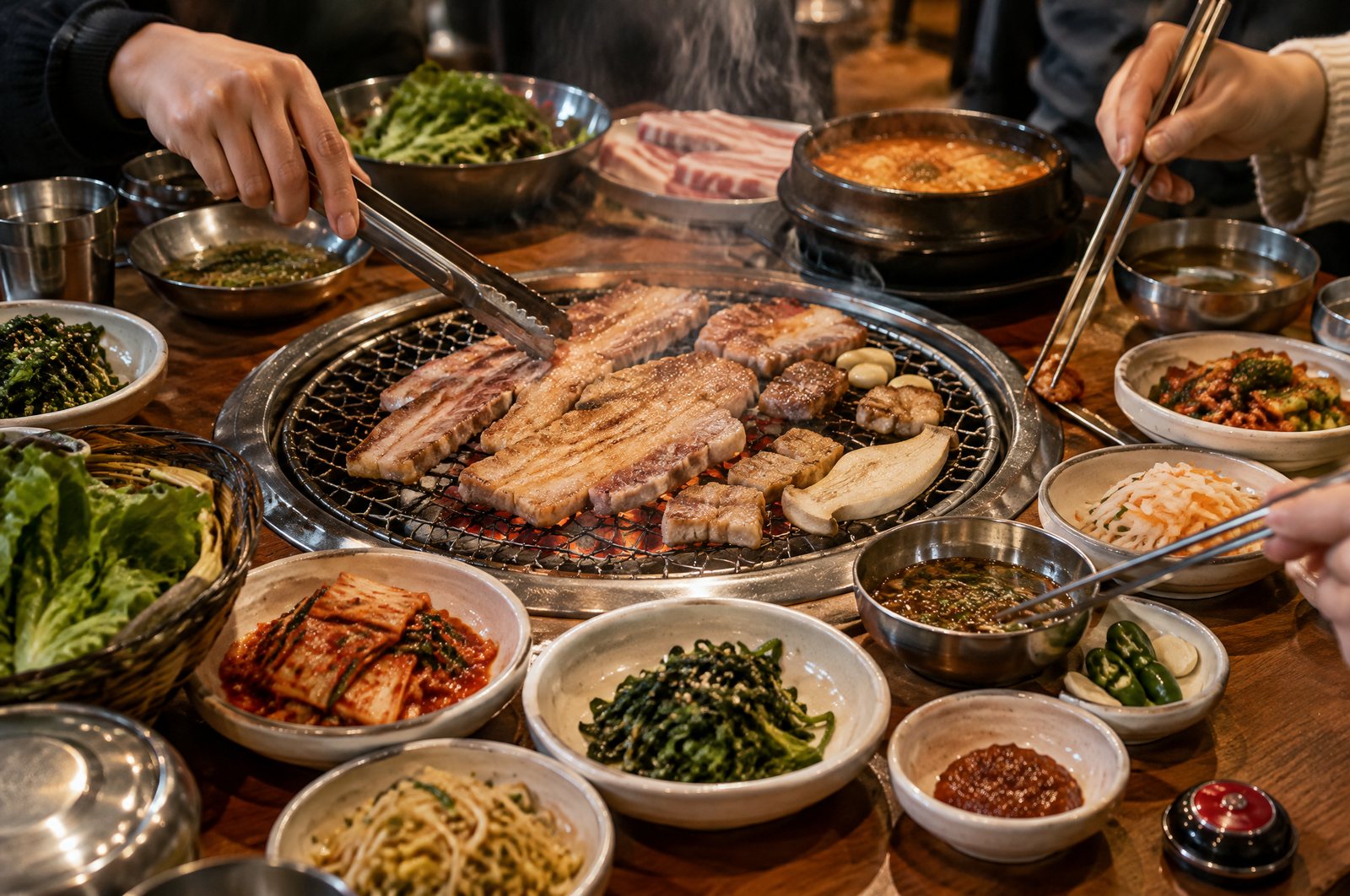
Stews and big plates go in the middle for everyone. Ask for 앞접시 주세요 (apjeopsi juseyo) to get small plates. At many BBQ places staff will start the grill and cut the meat with scissors for you; let them.
Paying
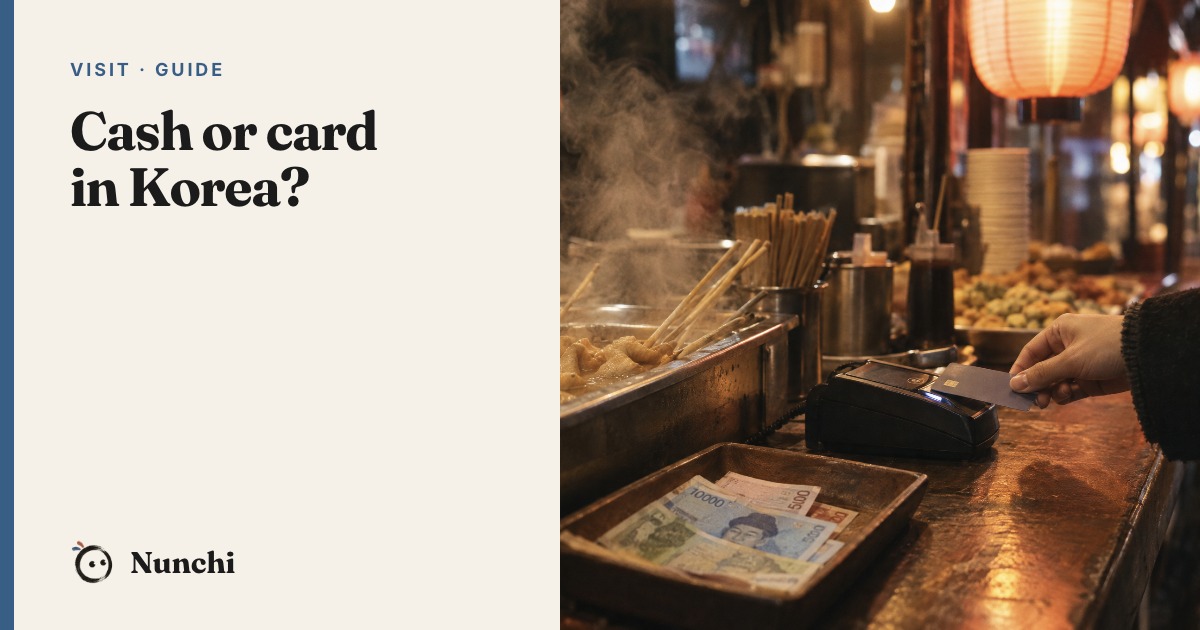
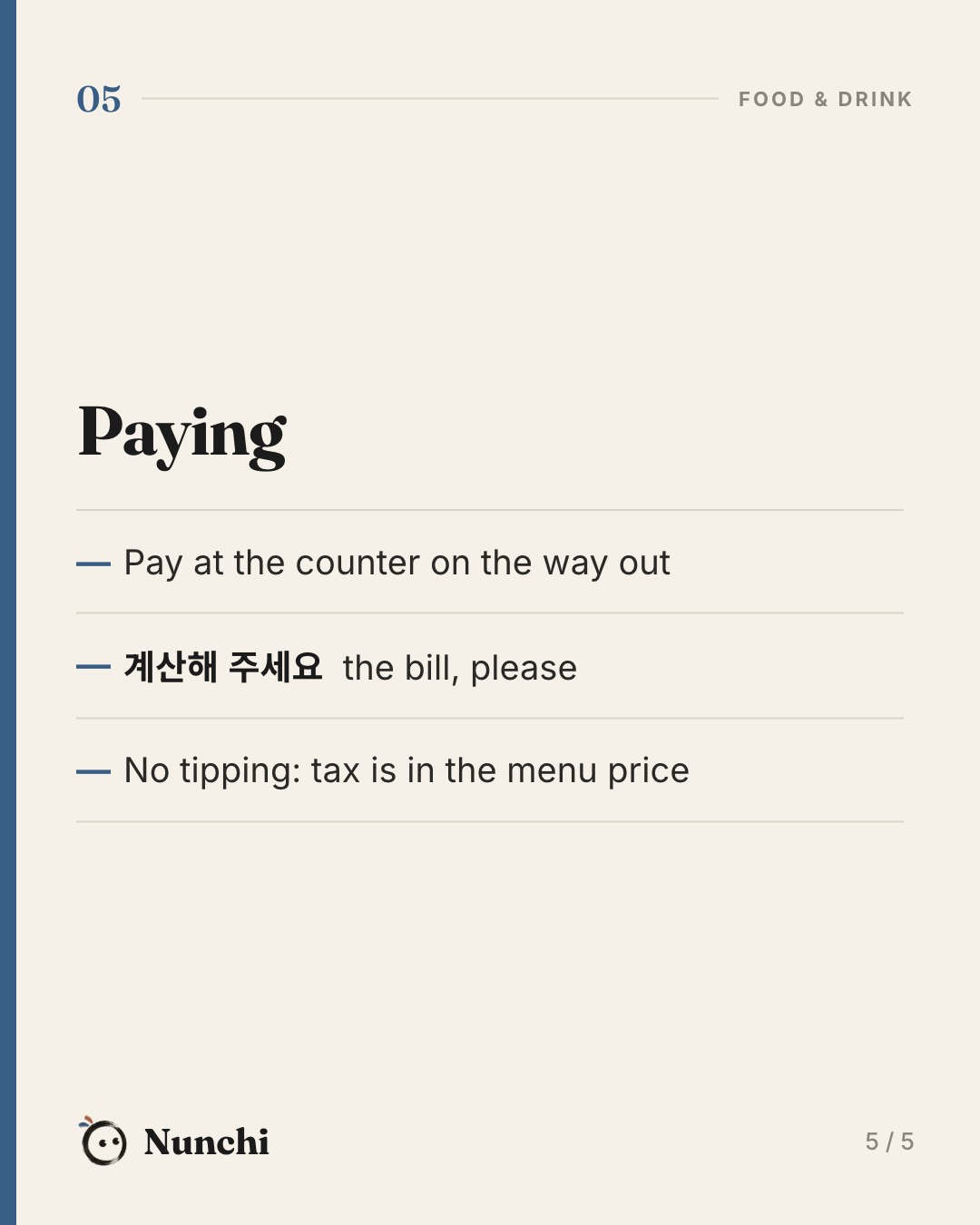
Unless you paid at a kiosk or tablet, go to the counter by the door when you've finished and say 계산해 주세요 (gyesanhae juseyo, "the bill, please"). Cards are taken almost everywhere; see cash, cards and ATMs in Korea. Paying separately? Say 따로 계산할게요 (ttaro gyesanhalgeyo). Busy places may prefer a single payment.
Don't tip. Tipping isn't expected or practised in Korea. Menu prices must include tax, and charging a service fee on top of the menu price breaks Korea's price-display rules.
Can't find something? It's probably self-service. Water is in the fridge, cups are on the shelf, and spoons and chopsticks are in the table drawer. Staff are busy, so Koreans help themselves.
Phrases
| Korean | Say it | Means |
|---|---|---|
| 여기요 / 저기요 | yeogiyo / jeogiyo | Excuse me (to call staff) |
| 이거 주세요 | igeo juseyo | This one, please |
| 1인분 돼요? | ir-inbun dwaeyo? | Can I order one portion? |
| 덜 맵게 해 주세요 | deol maepge hae juseyo | Less spicy, please |
| 반찬 더 주세요 | banchan deo juseyo | More side dishes, please |
| 물 주세요 | mul juseyo | Water, please |
| 계산해 주세요 | gyesanhae juseyo | The bill, please |