The four chains
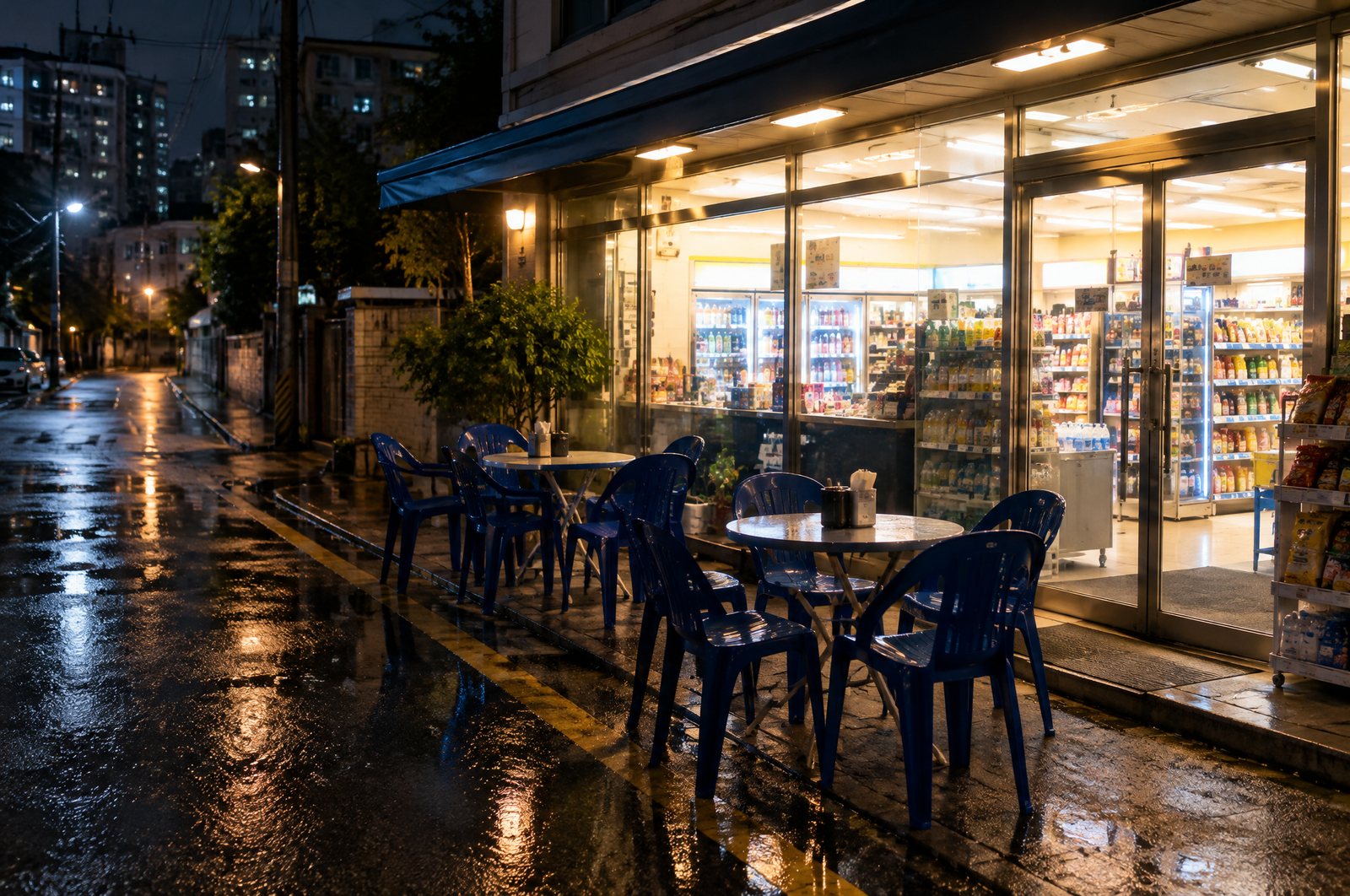
Korea's convenience stores (편의점 pyeonuijeom) are on almost every corner, many open 24 hours. CU and GS25 are the biggest, followed by 7-Eleven and emart24. They all sell much the same things, so use whichever is closest. Each runs its own deals, though, so the same drink can be cheaper next door.
They're not just for snacks. A Korean friend would use one for a cheap lunch, a late-night ramyeon, a T-money top-up, cash from the ATM and basic medicine when the pharmacy is shut.
What's worth buying
| What | Korean | About |
|---|---|---|
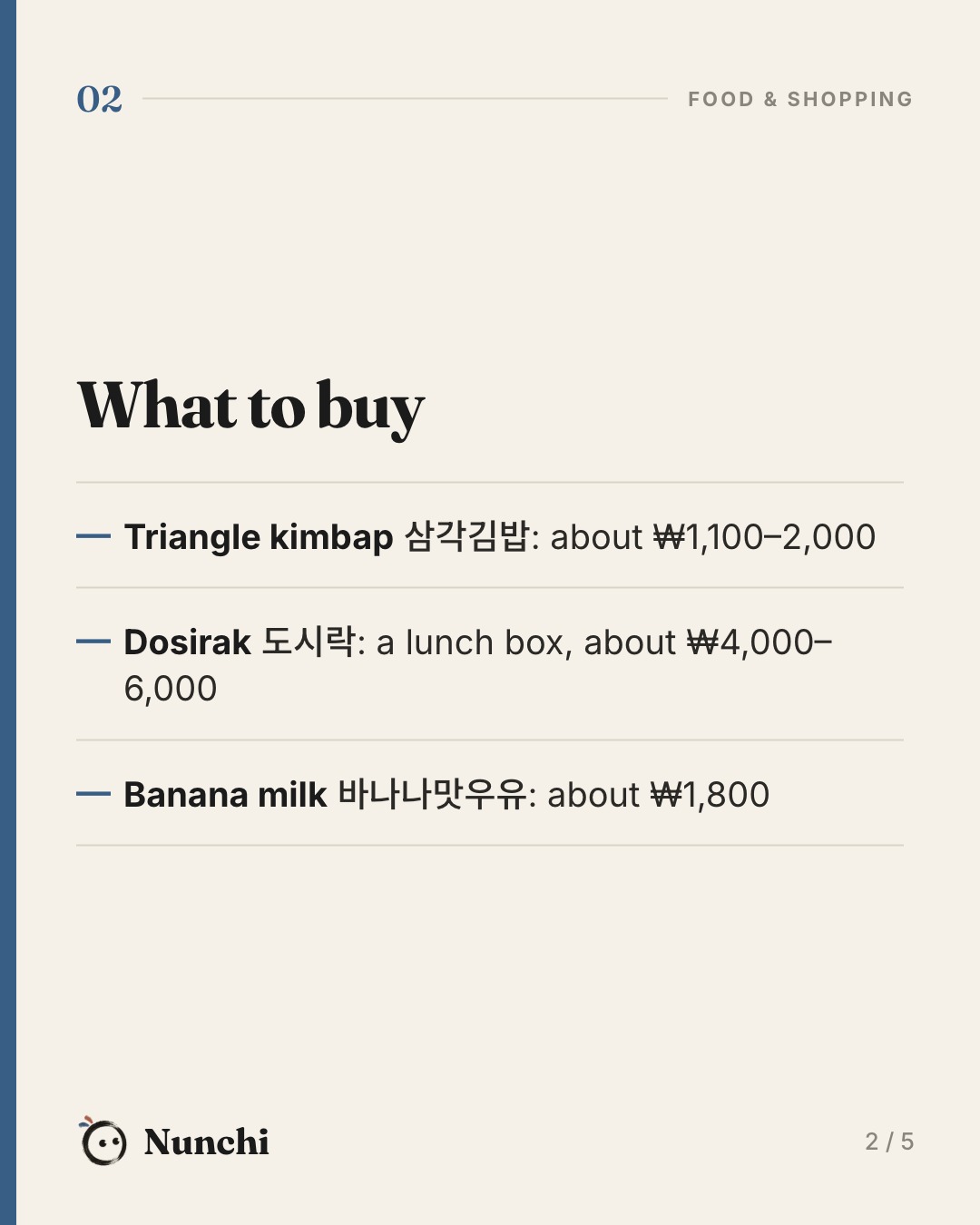
| Triangle kimbap: rice and filling in seaweed, tuna mayo is the classic | 삼각김밥 samgak gimbap | ₩1,100–2,000 |
| Lunch box with rice, meat and sides | 도시락 dosirak | ₩4,000–6,000 |
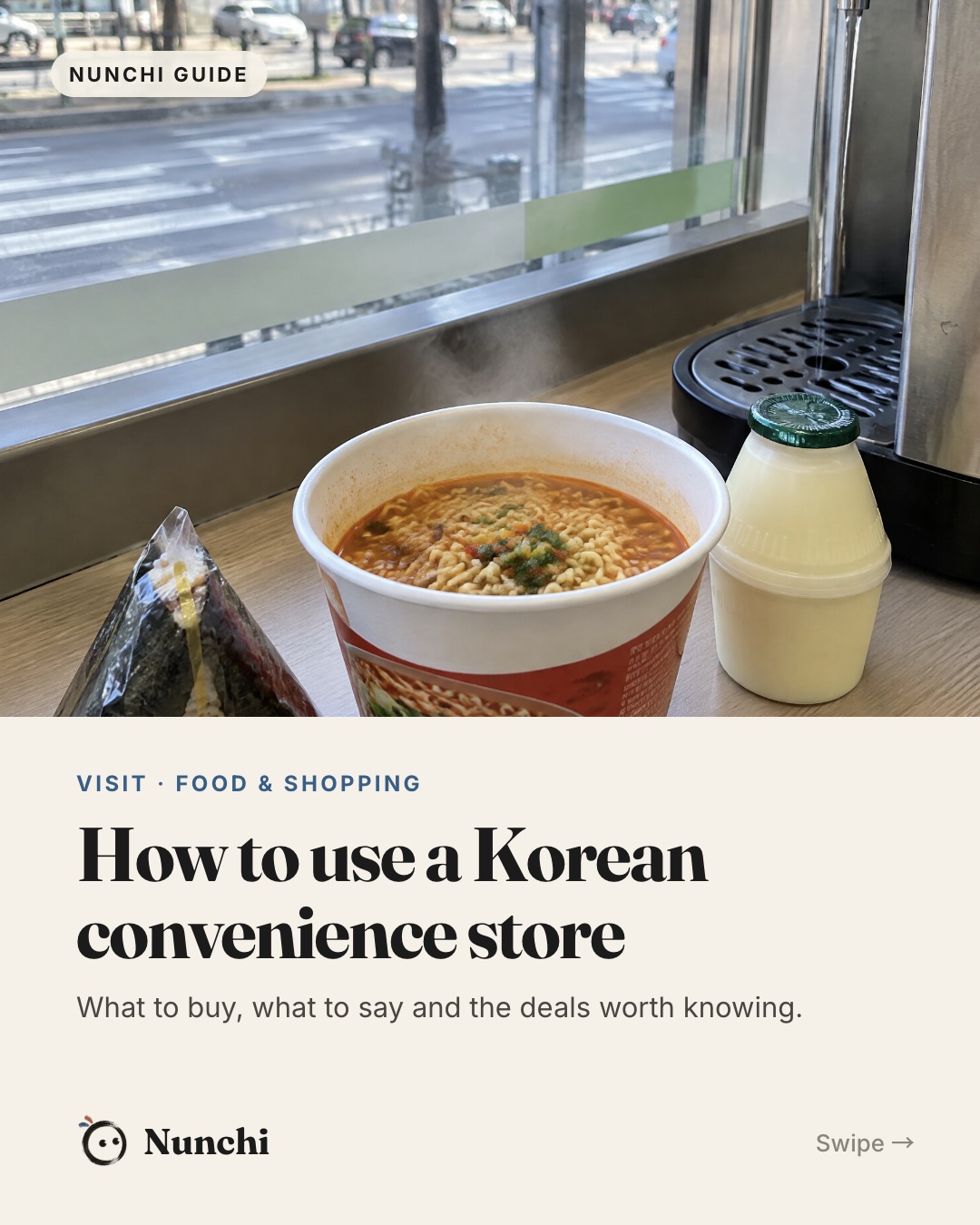
| Cup ramyeon | 컵라면 keop ramyeon | from ₩900 |
| Banana milk, the one in the squat bottle | 바나나맛우유 banana-mat uyu | ₩1,800 |
| Roasted sweet potato, autumn and winter | 군고구마 gungoguma | ₩2,000 |
Prices vary by chain and go up every year or so. Cheaper own-brand lines keep appearing: CU has sold a ₩990 triangle kimbap and an ₩880 cup ramyeon. Steamed buns (호빵 hoppang) usually arrive in the heated cabinet by the till from October.
The fridge also has hangover drinks (숙취해소제 sukchwi haesoje) such as Condition 컨디션, Dawn 808 여명808 and Morning Care 모닝케어. In Korea they count as drinks, not medicine.
Ramyeon, microwaves and seating
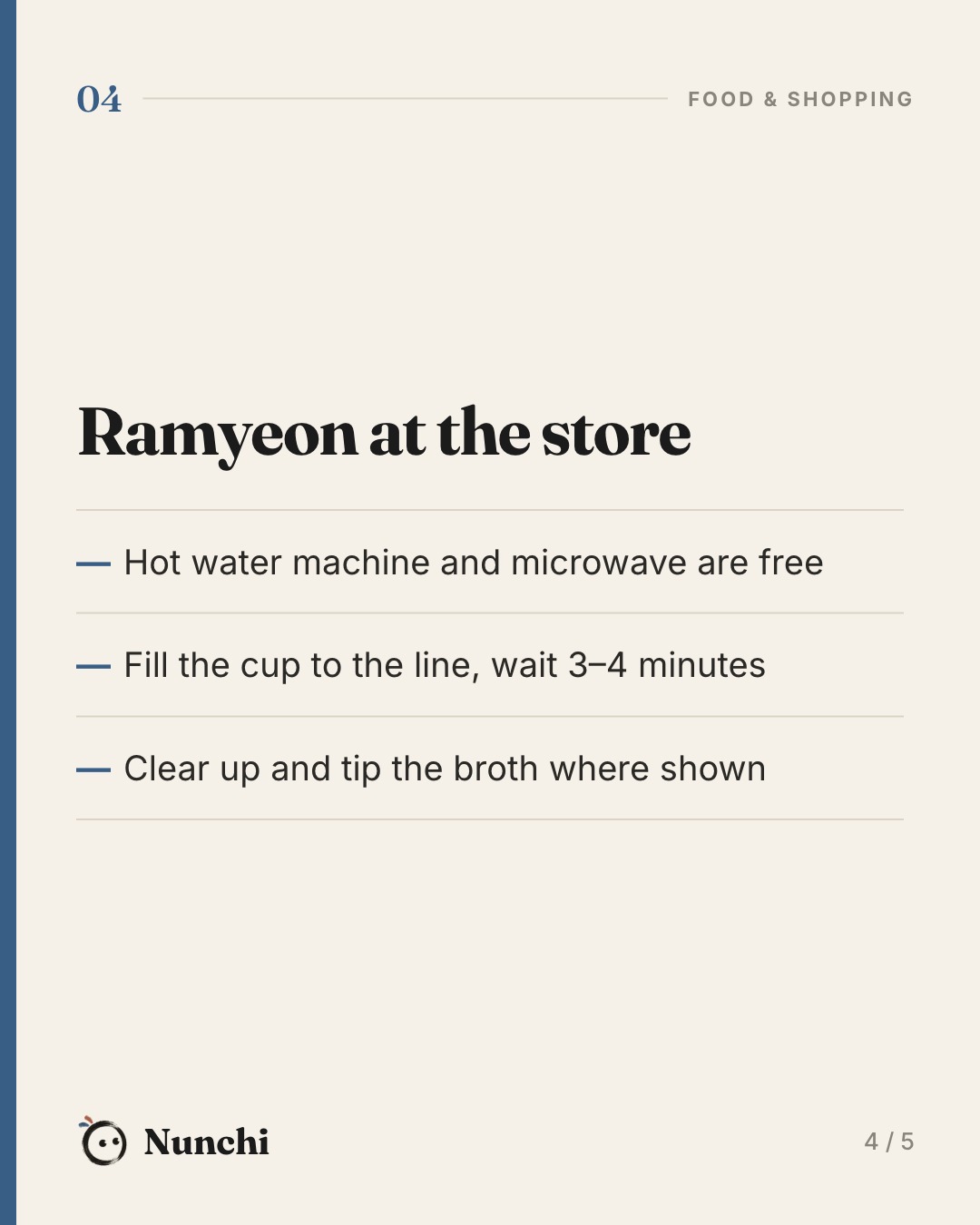
Most stores have a hot water machine and a microwave, free for customers. For cup ramyeon, peel the lid back halfway, add hot water up to the line inside the cup, close the lid and wait three or four minutes. For a dosirak, check the heating time printed on the lid. At the till, staff may heat it for you if you say 데워 주세요 (dewo juseyo, "please heat it up").
Many stores have a counter or a few tables inside, and bigger ones put tables outside in warm weather. Clear up after yourself: there is usually a bin or a sink for leftover broth and separate bins for cups and cans. If you can't see one, ask 국물 어디에 버려요? (gungmul eodie beoryeoyo?, "Where do I tip the soup?").
The classic late-night combo: a cup ramyeon, a triangle kimbap dropped into the broth once you've eaten the noodles, and a banana milk. About ₩5,000 for the lot.
The 1+1 and 2+1 deals
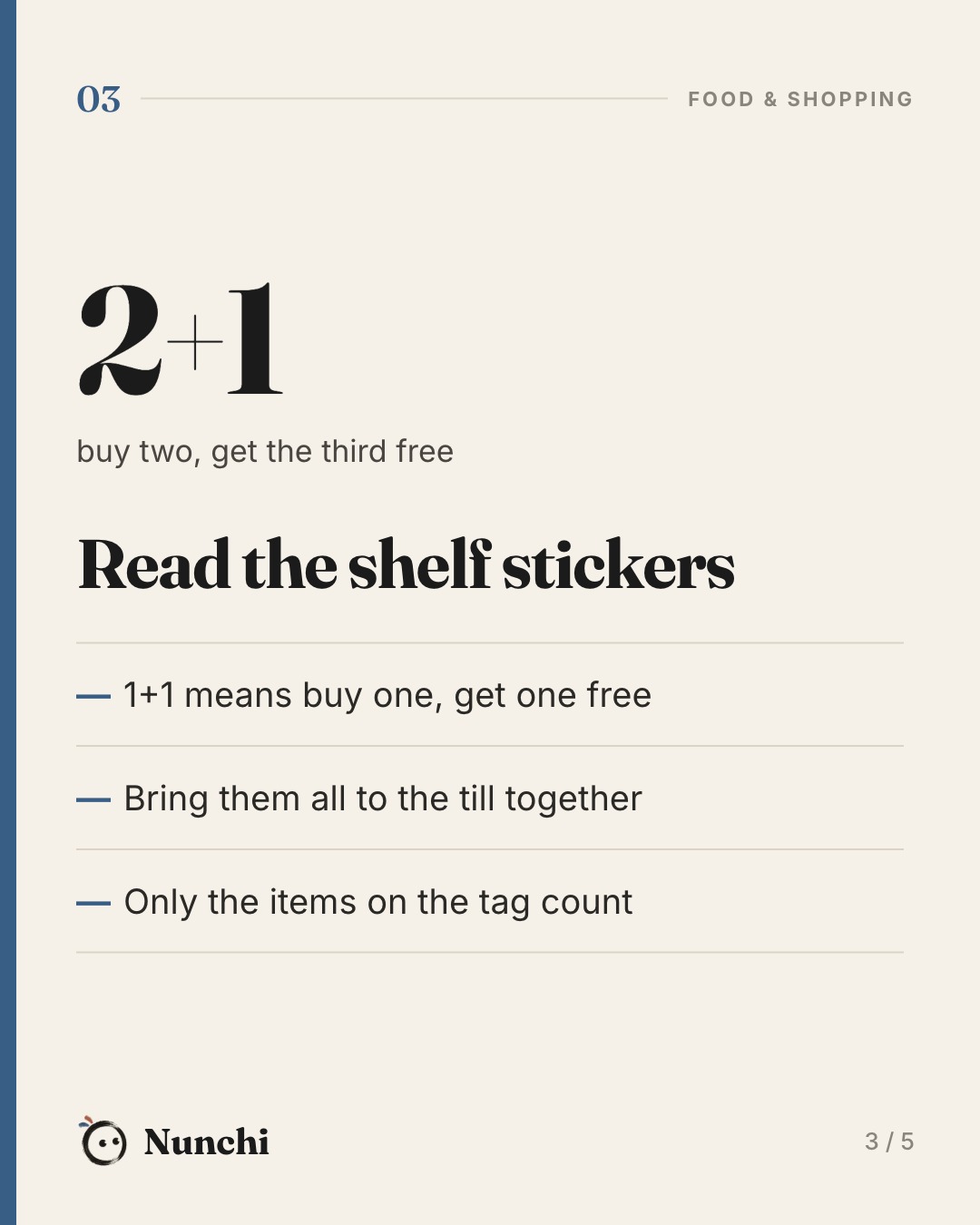
Look for stickers on the shelf. 1+1 means buy one, get one free. 2+1 means buy two, get a third free. They're mostly on drinks, snacks and ice cream, and each chain runs its own, often changing month to month. Bring all the items to the till together and the free one comes off automatically. Only the items on the tag count, so check before you grab a different flavour.
Paying: cards, cash and T-money
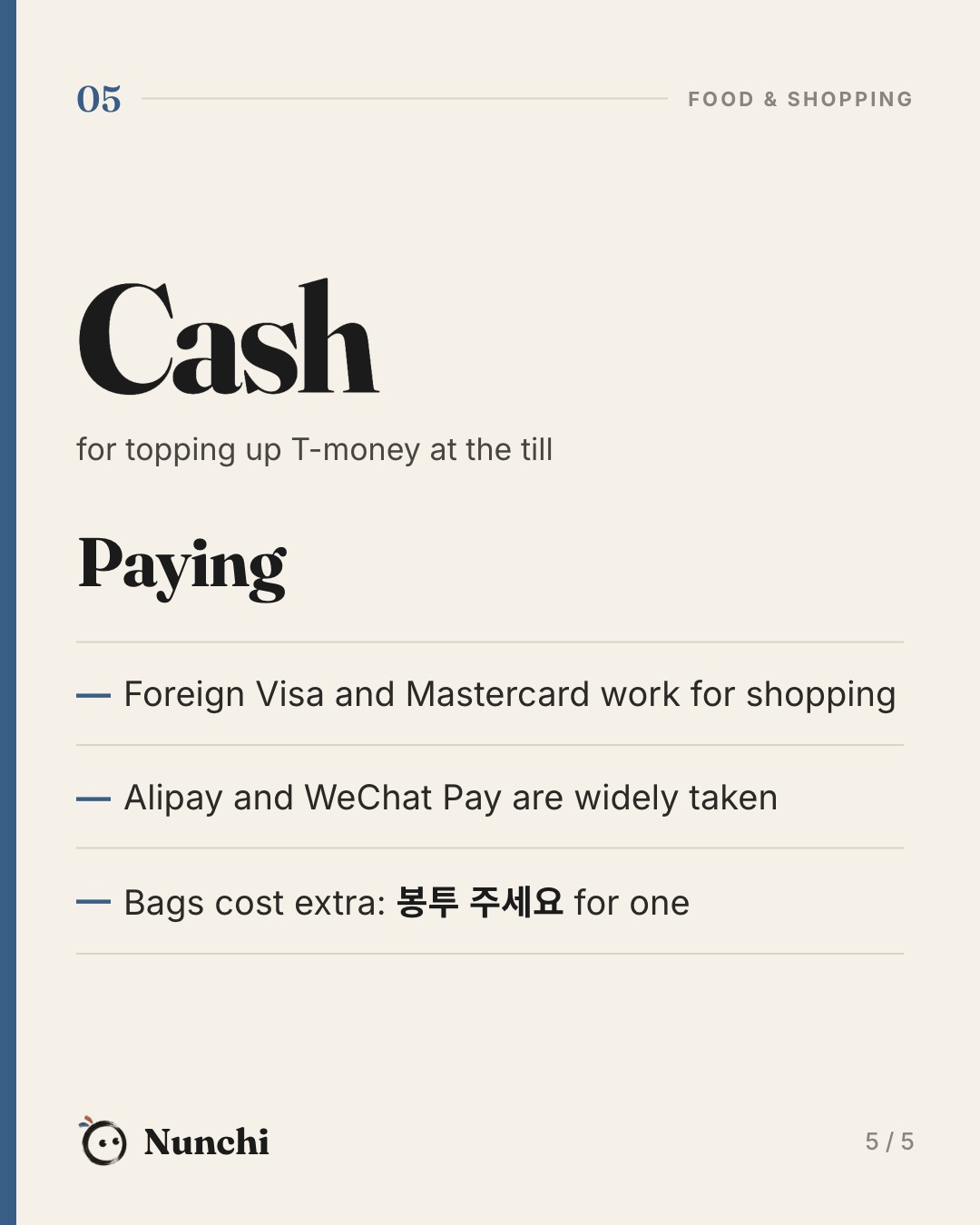
- Cards: foreign Visa and Mastercard work at almost every branch of the big chains, with no minimum spend. Insert the chip if tapping fails.
- Alipay and WeChat Pay are widely accepted at CU and GS25. At GS25 they made up almost all foreign payments in 2025.
- T-money top-ups are cash only at the till. Hand over the card and the cash and say 티머니 충전해 주세요 (timeoni chungjeonhae juseyo, "top up my T-money, please"). You can also buy a T-money card here. Not sure which transport card to get? Compare them with the T-money vs Climate Card tool.
- ATMs: many stores have one. Look for a Global ATM sign or Visa and Mastercard logos. They're handy at night but usually charge more than bank ATMs. More in cash, cards and ATMs.
- Bags aren't free. Stores no longer give out plastic bags. A paper or biodegradable bag costs from about ₩100, so carry a tote.
Beer, soju and ID
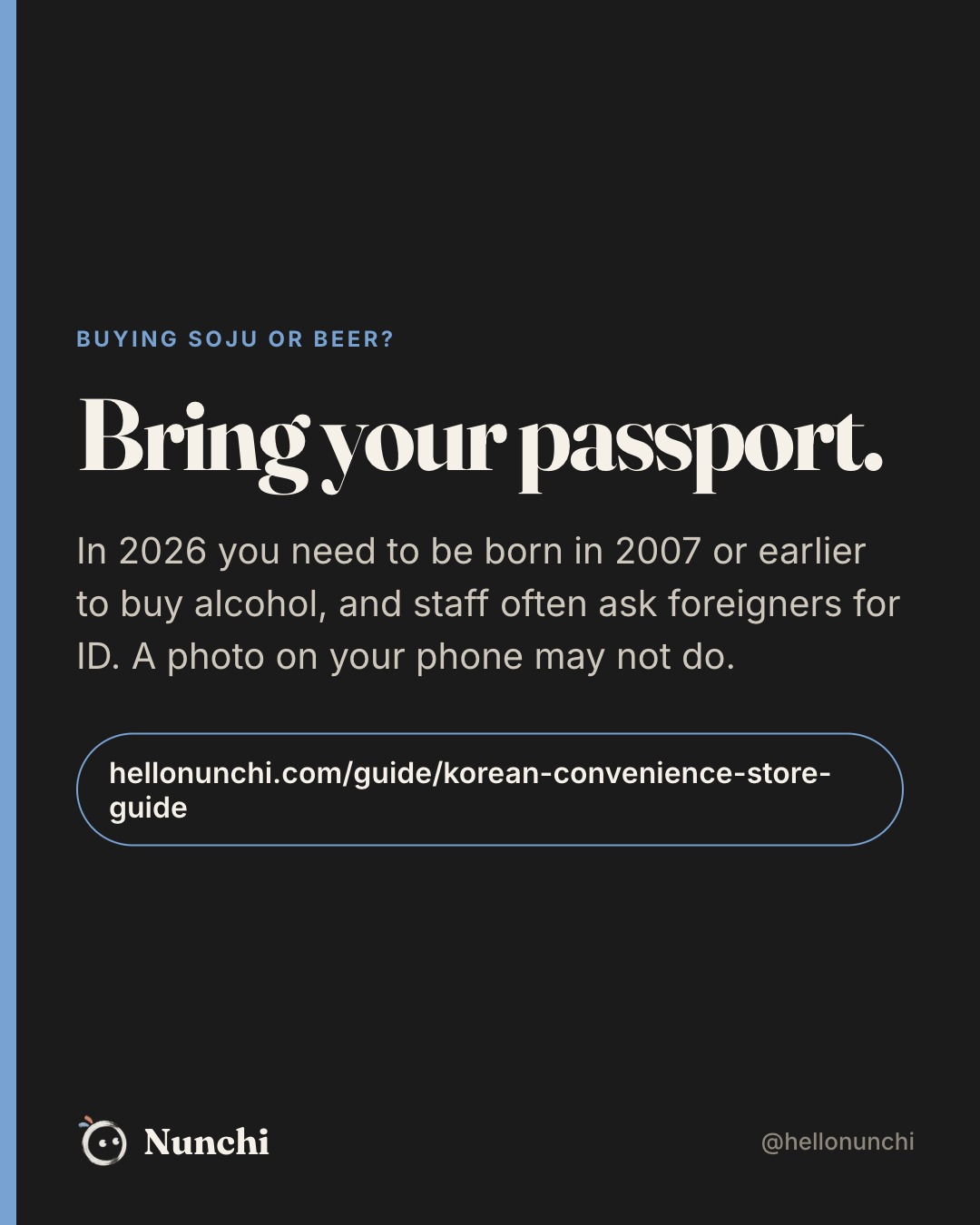
The legal age is 19, counted by birth year rather than birthday. In 2026 you can buy alcohol and cigarettes if you were born in 2007 or earlier. Staff often ask foreigners for ID. Carry your passport: a photo or copy may not be accepted.
Other things they do
- Medicine: a short list of basics such as Tylenol, cold medicine and digestives. See the pharmacy guide for what to ask for.
- Parcels: CU and GS25 send parcels within Korea from about ₩1,800 for store-to-store delivery, but tracking texts need a Korean phone number, and nothing goes abroad.
Say it at the till
| Korean | Say it | Means |
|---|---|---|
| 봉투 필요하세요? | bongtu piryohaseyo? | Do you need a bag? (they ask you) |
| 봉투 주세요 | bongtu juseyo | A bag, please |
| 괜찮아요 | gwaenchanayo | No thanks, I'm fine |
| 데워 주세요 | dewo juseyo | Please heat it up |
| 젓가락 주세요 | jeotgarak juseyo | Chopsticks, please |
| 카드 돼요? | kadeu dwaeyo? | Can I pay by card? |
| 영수증 버려 주세요 | yeongsujeung beoryeo juseyo | You can throw the receipt away |